Get Full Government Meeting Transcripts, Videos, & Alerts Forever!
Get email alerts on the Ems topic
No spam. Unsubscribe anytime.
Board advances creation of EMS advisory council, moves to place ‘essential service’ levy before voters
Summary
After a public hearing, the Crawford County Board of Supervisors approved the second reading of Resolution 2026-10 to designate emergency medical services as an essential service and to form an EMS advisory council (MSAC) that will study options and could recommend a November levy requiring a 60% approval.
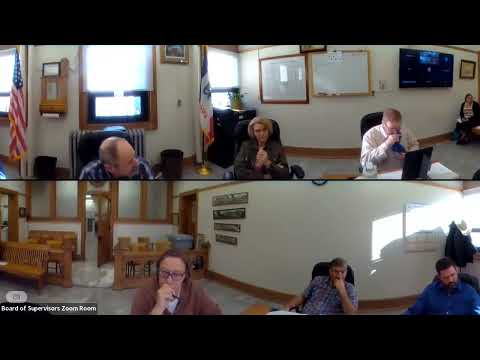
The Crawford County Board of Supervisors advanced Resolution 2026-10 after a public hearing on March 3, approving a second reading that will allow creation of an Emergency Medical Services Advisory Council (MSAC) and set in motion a process that could place an EMS essential-service levy before voters in November. The board voted unanimously to approve the reading and move the matter forward.
County staff member Rachel Jacobson explained that the advisory council would include a member of the board and representatives from local EMS departments and would be charged with studying service models and making recommendations to the board. “The resolution then moving forward would allow the creation of MSAC, which is an EMS advisory council that includes a member of the board of supervisors and usually representation from all the EMS departments in the county,” Rachel Jacobson said.
Residents who spoke asked whether the measure would replace hospital-run or municipal ambulance services and how a levy would work. A member of the public asked whether the county would become the direct ambulance operator; staff answered that the advisory council would explore options and that existing town or hospital services would not necessarily be eliminated. The board clarified that if placed on the ballot and approved, a levy could be set for up to 15 years and must meet the statutory approval threshold (board and attendees discussed 60% and references to a two-thirds or 60% threshold during the hearing).
Board members discussed the county’s limited levy authority and emphasized that the advisory council’s role is to develop recommendations before any ballot language is finalized. Chair Craig Jozark noted that the resolution itself only establishes the advisory body; any levy proposal would still require voter approval. After public input and discussion, the board closed the hearing, voted to approve the second reading and recorded the motion as carried.
The next steps identified by the board are formation of the advisory council, its initial meetings to study models and costs, and staff work to develop possible ballot language and financial estimates for a potential levy. The county indicated it would return to the board with advisory council recommendations and cost projections before any final decision to place a levy before voters.