Get Full Government Meeting Transcripts, Videos, & Alerts Forever!
Get email alerts on the Civil Rights Policy topic
No spam. Unsubscribe anytime.
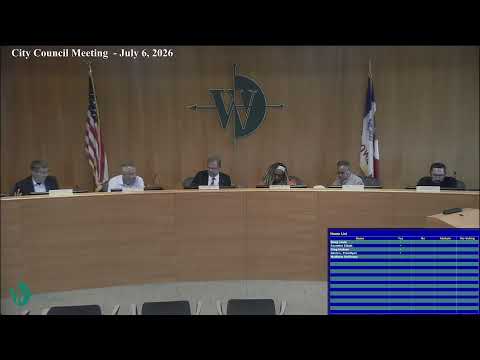
Council approves first reading to align city code with state law after public comment and debate
Summary
The council approved a first reading to amend city code to align with state law on nondiscrimination and related sections after public comment urged defiance and councilmembers debated legal obligations, fiscal risks, and civil-disobedience arguments; city attorney warned that failure to amend could render city code unenforceable or jeopardize grants.
The West Des Moines City Council voted to consider and approve the first reading of ordinance amendments across several titles—administrative, boards and commissions, and public ways and property—to bring city code into alignment with state law on nondiscrimination and related regulations.
A public commenter, MJ Hook, urged the council to resist the state law change on moral grounds and invoked a history of civil disobedience, saying the council is making “a choice to become complicit in the state's cruelty.” The mayor and several councilmembers responded that the council has a duty to follow state law and that failing to align code could make parts of the municipal code unenforceable.
Councilwoman Elliott and others acknowledged the moral complexity of the issue while emphasizing legal constraints. The city attorney (Greta) told the council that leaving the code as written would not make the city able to enforce conflicting local ordinances and might have implications for federal and state grant eligibility. After public comment and debate the council voted 4 yes, 1 no to approve the first reading and waive the subsequent reading to move the updates forward.
Council members framed the vote as a legal compliance action rather than a policy endorsement; several suggested community advocacy or other forums for opposing state action outside of changing local code. The council did not adopt a final ordinance at this meeting beyond the approved first reading and waiver.