Get Full Government Meeting Transcripts, Videos, & Alerts Forever!
Get email alerts on the Mfaf Funding topic
No spam. Unsubscribe anytime.
Douglas County approves off-cycle MFAF allocations for housing, health and first-responder wellness
Summary
Douglas County commissioners on March 18 approved a package of off-cycle allocations from the Municipalities Fight Addiction Fund that will fund a replacement van for Artists Helping the Homeless, mortgage relief and staffing support for Cardinal Housing Network, a school-based prevention pilot, a public-health testing pilot and a countywide first-responder wellness assessment.
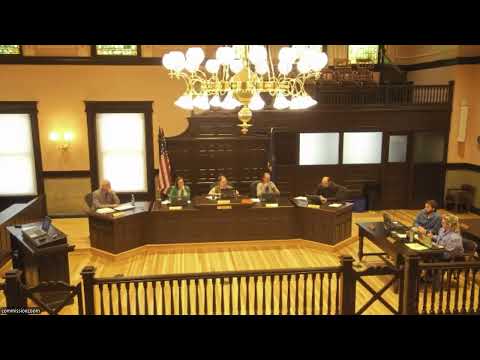
Douglas County commissioners approved a package of off-cycle allocations from the Municipalities Fight Addiction Fund (MFAF) at their March 18 meeting, directing staff to implement the projects that secured majority support during deliberations.
Staff framed the discussion by describing the county's experimental off-cycle process for MFAF and special-alcohol funds and recommended that the commission consider funding eligible projects from MFAF that aligned with the exhibit criteria. "Staff is recommending that all of these expenditures come out of MFAF tonight," Sarah, a county staff member leading the presentation, told commissioners during the meeting.
The package approved by vote includes a mix of one-time investments and short-term allocations that commissioners said should be evaluated against the fund's limited, tapering revenue. Among the items that gained majority support in public deliberations and were included in the approved list: a replacement van for Artists Helping the Homeless (to maintain client transportation services); mortgage relief for Cardinal Housing Network to reduce a high-interest debt burden and aid a transfer into nonprofit ownership; funding for a school-based prevention pilot from DECA; a pilot testing program for HIV and hepatitis among uninsured or underinsured residents in partnership with the health department and Bert Nash; and a countywide mental-health/wellness assessment for law enforcement and first responders across multiple agencies.
Dustin Moore, community manager for Artists Helping the Homeless, told commissioners the group's transportation work is essential to their model: "We provided 21,801 rides to our clients," he said, citing a 2022–2026 rides total to explain the urgency of replacing a vehicle that had more than 171,706 miles. Commissioners voiced support for funding the vehicle, while debating whether related branding/wrap costs should be covered or solicited as in-kind support.
On housing, applicants described an unusual timeline for Cardinal Housing Network: staff and the applicant said the project involved a property acquisition followed by a plan to transfer ownership into a nonprofit. Commissioners and staff discussed structuring any mortgage payoff so the transfer to nonprofit ownership meets legal and contractual standards. Jill Jolicker, assistant county administrator, explained that the county had financed a Phase 1 consulting contract and was considering Phase 2 if the commission wished to move forward.
Public-health initiatives approved for pilot funding included a substance-use needs assessment already included in the behavioral-health budget (no reallocation needed) and a separate testing program for HIV and hepatitis linked to work with Bert Nash. Jonathan Smith, executive director at Lawrence Douglas County Public Health, said the testing and follow-up would produce measurable data to inform longer-term planning.
Commissioners spent considerable time debating process: whether to prioritize one-time investments over ongoing costs given declining MFAF receipts (staff noted the fund is expected to taper from its current roughly $70,000–$80,000 annual level), and whether staff should provide a more granular rubric tying recommendations to the MFAF exhibit criteria. Several commissioners asked that future staff ratings and comments be more clearly tied to exhibit e eligibility and to indicate how proposals leveraged other public or private investments.
The consolidated motion to approve "the funding requests as discussed during the meeting that had three commissioners in favor or more" passed by voice vote; staff recorded the composite approval and will circulate the final allocation list and the implementation steps. Commissioners asked staff to return with follow-up language about legal contingencies for projects that implicate special-alcohol rules or transfers of property.