Get Full Government Meeting Transcripts, Videos, & Alerts Forever!
Get email alerts on the Special Areas topic
No spam. Unsubscribe anytime.
Teachers and parents urge Kyrene board to pause special-area scheduling changes, citing equity and process concerns
Summary
Dozens of parents and special-area teachers urged the Kyrene board to pause a recently announced change to art and music scheduling that would shift some schools to semester schedules, arguing it would create inequities and instructional gaps and asking for more stakeholder engagement.
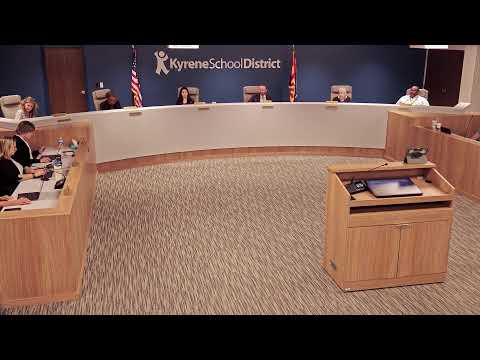
Scores of parents, PTO leaders and Kyrene special-area teachers used the public-comment period on April 7 to press the governing board to pause a proposed change to next year’s elementary special-area schedule that would place some smaller schools on semester plans.
Cassidy Parker Anders, a 30-year visual-arts teacher who identified herself as lead art teacher in the district, told the board she was "extremely concerned about the schools and teachers that would potentially implement a semester schedule," and warned the change "would create a very inequitable model" for students at smaller campuses.
Other speakers amplified that framing. Ashley Woodich, an art teacher at Monte Vista, said the proposed plan would create a "7-month gap" of arts instruction for some students and nearly double teacher workloads at smaller schools. "Teachers on a semester schedule will nearly double the number of students they teach," Woodich said. Several parents asked the board to delay adoption until the district completes more consultation with arts specialists, classroom teachers and families.
Evan Tobias, an associate professor of music learning and teaching at Arizona State University who identified himself as a Kyrene parent, urged the board to pause implementation and consult arts educators and the district fine-arts coordinator. Tobias cited national guidance recommending year‑round weekly instruction for music and said discontinuous semester models risk "cascading inequities" as students move on to middle and high school.
Several commenters – including former board member and longtime educator Michelle Faye – faulted the district’s communication and stakeholder engagement. "Trust is lost, but you can try to include the situation by talking with stakeholders to plan before executing any of these changes," Faye said.
District leaders told speakers the proposal is under review and that special-area leads recently met with the superintendent and administration to provide feedback; the superintendent said the district will bring a final model back to the board once staff have compiled input. The board did not take a vote on the schedule change during the meeting.
What’s next: District staff will continue meetings with special-area leads, solicit further feedback and present any revised proposal to the board before implementation.