Get Full Government Meeting Transcripts, Videos, & Alerts Forever!
Get email alerts on the Responsibility To Protect topic
No spam. Unsubscribe anytime.
UN chief de cabinet urges states to strengthen 'responsibility to protect' norm
Summary
Ellie Courtney Ratri, chief de cabinet of the Executive Office of the Secretary‑General, presented the 18th report on the responsibility to protect, warned of rising conflict and technological risks, and urged states to invest in national prevention measures and join relevant international instruments.
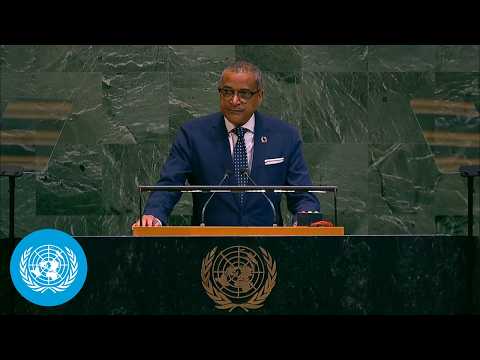
Ellie Courtney Ratri, chief de cabinet of the Executive Office of the Secretary‑General, told the General Assembly that member states must strengthen the responsibility to protect norm and invest in prevention measures to shield civilians from mass atrocities.
"The world faced more than 120 conflicts last year," Ratri said, citing the report under discussion, and warned that new technologies and online disinformation are amplifying risk. "We need to be proactive and vigilant and act before warning signs become mass graves," she said.
The statement, the 18th report since the 2005 commitment, framed itself as both a stock‑taking exercise and a blueprint for action. Ratri highlighted preventive diplomacy, early warning systems, independent and impartial justice systems, and support for independent media and civil society as key tools to reduce the risk of genocide, war crimes, ethnic cleansing and crimes against humanity.
She urged member states to invest in national prevention and protection programming, including designating focal points and establishing new domestic institutional arrangements. At regional and multilateral levels, Ratri called for integrating atrocity‑prevention into mediation, preventive diplomacy, security, technology, human rights and accountability frameworks.
On post‑atrocity steps, Ratri said non‑recurrence requires "truth, justice, accountability, reparations, institutional reform, and the meaningful participation of survivors," and stressed that women’s voices must be included throughout these processes with a gender perspective woven into every step.
Ratri also encouraged states to join and implement relevant international legal instruments, explicitly naming the Convention on the Prevention and Punishment of the Crime of Genocide.
The presiding officer thanked Ratri after the statement; no vote or formal action followed.