Get Full Government Meeting Transcripts, Videos, & Alerts Forever!
Get email alerts on the Infrastructure Safety topic
No spam. Unsubscribe anytime.
Emerson council agrees to move forward with architect for failing salt-shed after $350K–$450K estimate
Summary
After a decade of discussion, the Emerson governing body gave consensus to proceed with architectural design for repairs to a deteriorating five-bay salt-shed, with preliminary contractor estimates ranging about $350,000–$450,000 and roughly $286,000 currently available in a self-trust fund.
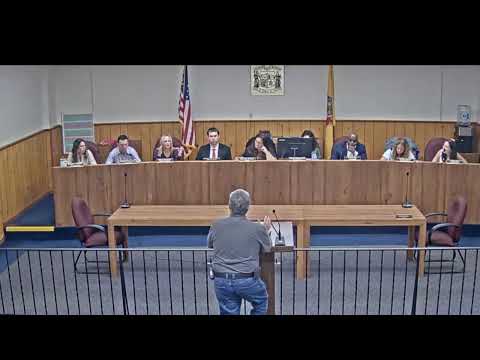
Emerson council members on Oct. 7 agreed to move forward with hiring an architect to design repairs to the borough’s five-bay salt-shed, which town staff described as structurally failing and in need of new walls, doors and a roof.
The presenter, a public works representative, told the council the back support wall started failing in 2017 and that previous patchwork had not resolved ongoing deterioration. He said bidders had declined earlier work because prevailing-wage requirements affected costs and that a recent informal estimate for full repairs was in the range of about $350,000 to $450,000. “We have the money earmarked except for the architect,” the speaker said, noting that an architect’s plans are needed before final pricing and that design fees are typically not covered by grants.
The council’s chair said the change to a formal ordinance or appropriation would be memorialized at a subsequent meeting and that staff would work with the borough’s liaisons to the Department of Public Works to refine options. Members asked whether a prefabricated steel building would be more economical; the presenter and council members explained that salt corrodes wood and metal and that masonry or poured-concrete walls were recommended for the salt bins to better resist salt exposure.
Council members discussed funding. The presenter said the borough’s self-trust fund held approximately $286,000 toward the project, leaving a shortfall that the presenter expected would be covered in the next fiscal year’s capital budget. The chair cautioned that most grants generally do not pay for engineering or architects, meaning the borough would likely need to fund the design phase even if it secured outside grant money.
Environmental constraints also shaped choices: the presenter said a DEP requirement to keep bulk materials at least 50 feet from the nearby stream limited options for locating a separate, standalone salt building, so the preferred approach focused on reinforcing the existing five-bay structure while preserving vehicle clearance and storage.
By consensus the council directed the DPW liaisons to continue working with the presenter and the chosen architect, and to report back with refined plans and cost estimates during the budget cycle. No formal appropriation was voted on at the meeting; council members signaled support to include remaining financing in a future capital bond or budget request.
Next steps: staff will finalize architect engagement, prepare design documents and return to the council with recommended funding options and a project budget for formal approval.