Get Full Government Meeting Transcripts, Videos, & Alerts Forever!
Get email alerts on the Economic Development topic
No spam. Unsubscribe anytime.
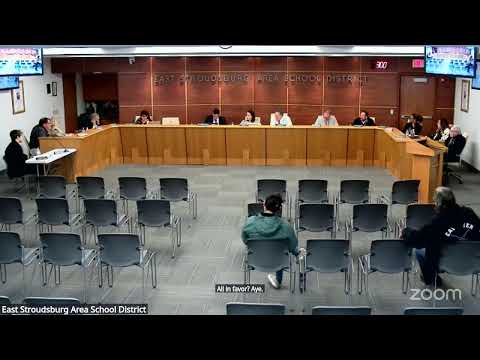
Developer outlines shift to data center and TIF hurdles at East Stroudsburg Area SD meeting
Summary
At the March 16 board meeting, a developer presenting the Smithfield Gateway project said traffic and PennDOT road requirements have constrained prior buildout and described a pivot toward boutique data center buildings, arguing they would yield high tax revenue to support remaining TIF obligations; board members pressed for details on ratables, remaining debt and infrastructure studies.
A developer presented updates on the Smithfield Gateway redevelopment to the East Stroudsburg Area School District board on March 16, saying longstanding road and permitting constraints have limited earlier phases but that recent grant awards and private investment are putting the project back on track.
The presenter said the site comprises about 120 acres, with roughly 90 acres to the west of Route 209 and 30 on the east. He said initial phases produced limited ratables—Saint Luke’s and Wawa were among the early occupants—but major buildout stalled because PennDOT required extensive improvements on Routes 209 and 447. He said the developer assembled private capital, grants and TIF financing to do first‑phase road work and recently secured an additional grant credited to a state senator to fund remaining west‑side improvements.
When asked by board members why the TIF, adopted in 2018, has produced few ratables to date, the presenter acknowledged the shortfall while saying the first loans and roadwork consumed much of the early proceeds. Board members pressed whether the district should unwind the TIF to avoid ongoing exposure; the presenter and a district finance representative said existing debt obligations would remain even if the TIF structure changed, though a data‑center tenant could accelerate paydown by generating higher tax revenue.
The developer said the project has pivoted from an earlier concept that included up to 500 residential units toward a ‘boutique’ data center plan consisting of two roughly 125,000‑square‑foot buildings that, he argued, would produce substantial tax revenue and relatively low demands on township services. He described a conditional‑use submission for the township and said the sites are currently in an Economic Development Zone; a data center would be a by‑right use there but would still require a conditional‑use review addressing traffic, water and community impact.
Board members also asked about infrastructure needs: the presenter said a MedEd study on fiber and power is underway, and that a water agreement with the existing supplier (BCRA) is in place with committed gallons at an agreed rate. He said tax‑revenue projections and a formal economic analysis would be included in the township submission and expected within three to four weeks.
The presenter said east‑side plans still anticipate about 250 apartments and commercial pads (including a proposed Hilton operator), but emphasized that the data‑center option produces higher ratables with lower service impacts; if no data‑center tenant materializes, he said high‑density residential would remain a fallback. The board recorded no formal vote on the developer’s plan but requested updated financials, the revised TIF/amendment documents if the proposed project changes the original TIF plan, and further evidence of infrastructure readiness before substantive board action.
Next steps: the developer will include tax/revenue estimates and infrastructure studies in an upcoming township submission; the district indicated any TIF amendment would return to the board for approval.