Get Full Government Meeting Transcripts, Videos, & Alerts Forever!
Get email alerts on the Sports Wagering topic
No spam. Unsubscribe anytime.
Sports Wagering Council updates rules to tighten KYC, add statewide self‑exclusion management
Summary
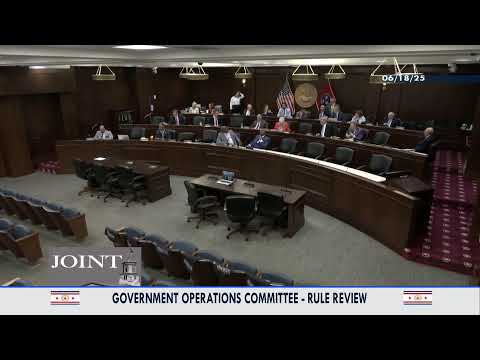
The Tennessee Sports Wagering Council presented rule amendments strengthening know‑your‑customer and geolocation standards, clarifying responsible‑gaming communications and proposing a statewide self‑exclusion list; the committee moved the package with a positive recommendation in the House and no recommendation in the Senate.
Stephanie Maxwell, deputy director and general counsel for the Tennessee Sports Wagering Council, summarized amendments to three rule sets and a new consolidated rule that rehouses duplicative language. Maxwell said changes fall into three buckets: cleanup/reorganization; technology and consumer protections (strengthened know‑your‑customer verification and geolocation to ensure wagers are placed within Tennessee borders); and operational adjustments informed by three and a half years of regulatory experience, such as removing an ineffective insurance requirement and changing the type of account used to hold privilege tax receipts.
Maxwell described improvements to the self‑exclusion and responsible‑gaming framework: the council will manage a statewide self‑exclusion list to which patrons can add themselves via the agency website or operator portal; operators must close accounts and stop marketing to excluded patrons. She said operators already use monitoring tools and that some use algorithms to detect problematic behavior, and noted integrity‑monitoring providers that report suspicious wagering patterns to regulators and operators.
Legislators questioned how privilege tax receipts flow and whether recent legislation redirecting education funding to vouchers affects the distribution; Maxwell said the treasurer administers privilege tax distributions and that a bill passed in the special session changes where some education funding is directed. Representatives also pressed for details on involuntary self‑exclusion options used in other states, enforcement of integrity providers, and the authority to cancel wagers in specified circumstances; Maxwell answered that some states allow involuntary exclusion and that the council can investigate cancellations depending on facts and rule language.
The committee had no public comment. The House moved the package with a positive recommendation; the Senate recorded a result of no recommendation with a mix of ayes and present/not‑voting.