Get Full Government Meeting Transcripts, Videos, & Alerts Forever!
Get email alerts on the Equal Employment Rule topic
No spam. Unsubscribe anytime.
DOHR outlines emergency change to equal employment opportunity definition to comply with federal executive order
Summary
The Department of Human Resources proposed an emergency amendment to Tennessee's equal employment opportunity plan definition to align with Presidential EO 14173; legislators pressed the agency for detail on what applicant data is collected and the fiscal risks of noncompliance.
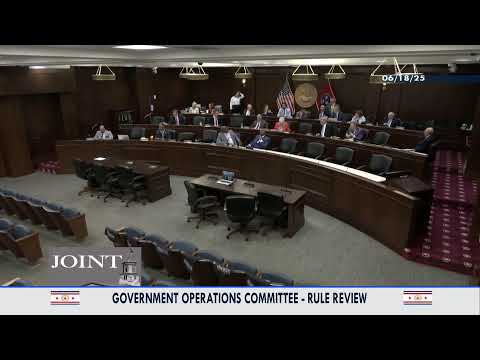
Eric Mayo, senior policy adviser for the Department of Human Resources, told the joint Government Operations Committee that DOHR filed an emergency rule to revise the state's definition of an "equal employment opportunity plan" in rule 11.2001.01 to comply with Presidential Executive Order 14173 (dated Jan. 21, 2025). Mayo said the new definition frames the plan as "a statistical document which identifies and analyzes patterns in the participation and utilization of certain groups in the workforce based on federal and or state law requirements," and that the emergency filing was prompted by a federal 90‑day compliance window.
Members asked whether the change requires all state departments to alter hiring‑form questions or data collection. Representative McKenzie said he wanted to know if the state itself is treated as a "department" under the executive order; Mayo and DOHR staff replied the order applies to federal contractors and recipients of federal funding, and that the department updated its equal opportunity plan to reflect the federal direction and to protect federal grant eligibility. The agency said it would follow up with a written list of which application fields are currently collected and which, if any, are used in hiring decisions.
Representative Glenn asked whether tracking of race, gender or other demographic fields will be removed from application forms; Mayo said he would double‑check how application questions are currently presented and pledged a follow‑up to the committee. Representative Hardaway asked the department to clarify the difference between "tracking" and "gathering" and to provide a fiscal analysis of the consequences of noncompliance. DOHR said it understood that noncompliance could put federal funding at risk and that the emergency rule was intended to avoid immediate disruption pending permanent rulemaking and a public hearing the agency has scheduled.
The committee did not receive public comment on the item and moved the emergency rule with a positive recommendation to both chambers; a recorded Senate tally showed seven ayes and one no on the senate vote. The agency said it has initiated a parallel permanent rulemaking and expects to finalize changes by October, pending standard rulemaking procedures.