Get Full Government Meeting Transcripts, Videos, & Alerts Forever!
Get email alerts on the Wildlife Management topic
No spam. Unsubscribe anytime.
Wildwood council approves resident survey on deer management, drops technical section and re-adds 1‑acre option
Summary
Council approved a revised digital survey to measure resident support for changing the minimum parcel size for archery hunting; members removed a technical 'Section 4' about counting methods and directed staff to include an option for a 1‑acre reduction with parcel aggregation. The city plans randomized distribution and expects results in July–August.
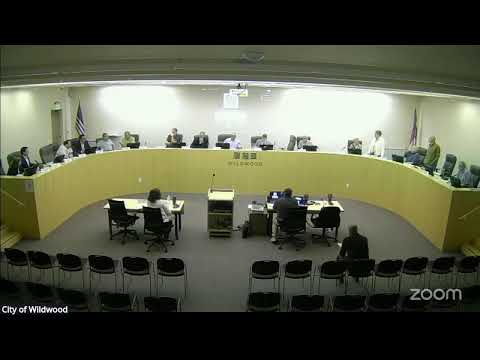
The Wildwood City Council voted on June 8 to direct staff to proceed with a randomized digital survey of residents on deer management and archery‑hunting rules. After extended debate about survey length, technical language and whether to ask residents about survey methodology, council approved a clean draft that removes a technical section (Section 4) describing counting methods and retains the primary substantive questions about permissible parcel sizes. Council also instructed staff to add back an option that would reduce the minimum parcel size to 1 acre with parcel aggregation.
City Administrator Lee described three survey exhibits and explained changes requested by the Administration & Public Works Committee and the Missouri Department of Conservation (MDC). MDC provided a single substantive comment recommending a note that state wildlife professionals favor distance‑sampling methods; staff put that guidance into a separate informational box that the council could remove if it wished. The committee had also suggested a drone survey as an item for discussion; staff estimated a drone survey could cost roughly $50,000–$60,000 and said professor Naines (survey methodology contractor) would run the random sample and analyze results.
Council members were sharply divided on whether to include technical methodology in the mailed materials. Several members said including drone-versus-distance‑sampling language would confuse respondents and risk biasing results; others urged transparency about counting options. After extended debate the council voted to remove Section 4 (the technical methodology section) from the publicly distributed survey and to proceed with the shortened, randomized instrument. Council also agreed to reinsert the choice to reduce parcel size to 1 acre with the possibility of aggregating contiguous parcels — an option the committee had discussed removing.
Staff said the plan is to distribute the survey digitally to a randomized list of addresses (provided to Professor Naines) beginning around mid‑June, keep the response window open about one month, send one follow‑up reminder, and aim to have analysis completed by early August for a council presentation in August or September. Staff estimated that the survey sample will include about 1,200 addresses with an expected 40–50% response rate. Professor Naines will review the instrument for bias and may recommend changes; staff said substantive instrument changes recommended by the contractor could require returning to council.
What happens next: Staff will proceed to produce the randomized, digital survey with the modifications approved by council (Section 4 removed; 1‑acre + aggregation option added). Results will be analyzed by Professor Naines and presented to council later this summer; council retains authority to act on the larger policy question after seeing survey results.