Get Full Government Meeting Transcripts, Videos, & Alerts Forever!
Get email alerts on the Arp Funding topic
No spam. Unsubscribe anytime.
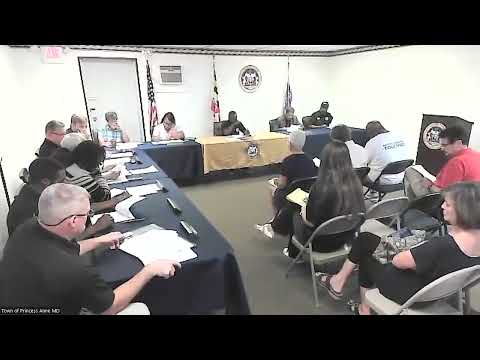
Town work session debates two plans to spend remaining ARP funds before Dec. 31 deadline
Summary
A special work session in the Town of Prince Of Ed on Oct. 3, 2024, centered on two competing proposals for remaining ARP funds: the administration’s plan projects an $80,000 surplus by using ARPA to cover approved expenses, while a commissioner-backed plan would leave the town carrying roughly a $111,000 deficit; decisions must be made before the commission’s Oct. 7 meeting to meet the Dec. 31 federal deadline.
At a special Town of Prince Of Ed work session on Oct. 3, a town staff member told commissioners that the purpose of the meeting was "final approval" of American Rescue Plan Act funds and emphasized a firm federal deadline: "these funds must be spent, allocated, and contracted before 12/31/2024," or unspent money would have to be returned to the U.S. Treasury. The commission was told it must make commitments by its next meeting on Oct. 7.
Two written proposals were presented for how to allocate the remaining ARPA money. One, described by an administration speaker, would apply a large portion of ARPA to already‑approved general‑fund expenses and projects; the administration said that approach would eliminate the town’s deficit and produce a projected surplus of about $80,000 for fiscal 2025. The alternate proposal, prepared by a commissioner and staff collaborators, would allocate more funding to direct business assistance and other priorities but, according to figures discussed in the meeting, would leave the town with an estimated carryover deficit of about $111,000.
Speakers walked through the major differences. The administration’s draft applies ARPA to items that have already been approved in the town budget and includes line items such as vehicle purchases, body cameras, parks equipment and a final mural payment. The administration also proposed paying off the town’s trash truck with ARPA, which an administration speaker said would "save this town $30,000 for the next 3 years." Both proposals include $250,000 for street work; both include a $150,000 allocation for a North and South Gate drainage study. The commissioner’s plan would devote relatively more money to business assistance and minority business grants and retain a larger general‑fund carryover shortfall.
Participants also discussed several reconciliation items that affect the year‑end balance: an expected $56,000 reimbursement tied to the Paragon project, and an ongoing annual savings of roughly $50,000–$60,000 in hotel utility costs now that the town no longer has full responsibility for the property. Those reimbursements and savings, speakers said, would reduce the town’s projected deficit but did not eliminate the need to decide which allocation approach to adopt.
The meeting included questions about ARPA eligibility. One participant asked whether any items on either list would be ineligible for ARPA; a speaker replied that the items before the commission were meant to qualify, while others urged prioritizing economic recovery uses such as business grants and measures to address racial wealth disparities. Commissioners and staff also exchanged differing characterizations of a police vehicle line item: some speakers said the police vehicle was already funded in the town’s budget, while others discussed using ARPA to cover it. The amount cited for the vehicle varied in the discussion (speakers referenced both $123,000 and $143,000 during the meeting).
Multiple speakers asked that the two proposals be made available to the public for side‑by‑side comparison so citizens could evaluate the tradeoffs. One attendee asked commissioners to speak up and to present clearer materials so the public could understand why the town might move from a surplus to a deficit under one plan.
No formal vote on the ARPA allocation was recorded in the transcript. Town staff said resolutions for several grant programs (including elderly tax credits, business assistance and minority business grants) are prepared and would be available to move forward once the commission decides which funding approach to adopt. The commission is expected to take up final action at its Oct. 7 meeting to meet the federal spending deadline on Dec. 31, 2024.