Get Full Government Meeting Transcripts, Videos, & Alerts Forever!
Get email alerts on the Local Budget And Arp topic
No spam. Unsubscribe anytime.
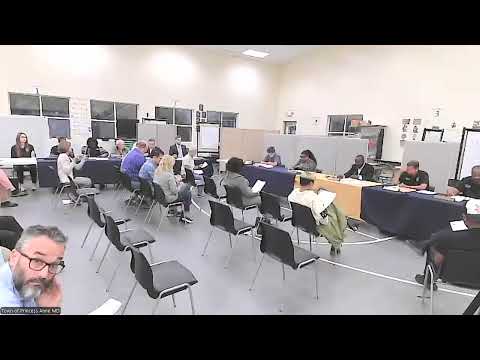
Princess Anne commission adopts ARPA resolution after heated debate over grants, deficit and ethics vacancy
Summary
After extended public comment and sharp debate about two competing ARPA proposals, the Princess Anne Town Commission adopted a resolution authorizing ARPA-funded programs including an elderly tax reimbursement and small-business grants amid concerns about potential deficits and an empty ethics commission.
The Princess Anne Town Commission adopted resolution 2024-11 on ARPA-funded spending after heated public comment focusing on budget balancing, potential conflicts of interest and a vacant ethics commission.
The vote, called by the presiding officer, was declared passed by unanimous consent after commissioners debated two competing proposals for American Rescue Plan Act funding that commissioners said were identical in infrastructure spending but differed in how much each set aside for minority-owned business grants. The chair said citizens’ comments were scheduled at the end of the meeting and moved the agenda forward before the vote.
Why it matters: The package includes an elderly tax-reimbursement program that would provide up to $500 in reimbursements for qualifying homeowners and two small-business grant tracks: one targeted at minority-owned businesses and a second open to all qualifying businesses. Commissioners and members of the public said the proposals also include capital items: a list of repairs and flood mitigation projects that the chair said include $250,000 for repairs and another $150,000 toward North and South Gate flood mitigation, and that a state senator had pledged an additional $500,000 toward the flooding work.
Commissioner (speaking during debate) warned of fiscal risk, saying, “The 2nd proposal ... would put the town in the deficit of over a $110,000.” That concern animated many public remarks that followed; residents repeatedly urged the commission not to approve a package that would increase the town’s shortfall without a clear plan to balance the budget.
Public commenters described local hardships and urged fiscal caution. Leonelle Fletcher Hill, a local business owner, said her store was forced to close after repeated break-ins: “My business is closed,” she told the commission, urging officials to prioritize financial stability for existing businesses rather than larger grant sums that she said would not reach struggling proprietors.
Several speakers also criticized the governing process. A resident noted that applications for the town’s ethics commission had been submitted and not processed and urged the commission to fill the vacancy; another warned the town could be in violation of state law without an active ethics body. The town’s attorney and commissioners discussed the narrow legal standard for conflict of interest at the dais, noting officials must avoid voting on matters where they stand to gain a direct financial benefit.
What the vote did: The chair called for a voice vote on resolution 2024-11 and declared it adopted by unanimous consent; an on-floor exchange immediately afterward showed some confusion about whether two no votes had been recorded, but the chair confirmed the passage. The meeting then moved to the account manager’s report and later adjourned into a closed session on personnel matters.
Next steps: Commissioners said staff would track the budget and return to the finance committee and upcoming work sessions for further review; residents who raised concerns urged the commission to act on outstanding ethics-commission applications and to provide clearer budget figures in future sessions.