Get Full Government Meeting Transcripts, Videos, & Alerts Forever!
Get email alerts on the Performing Arts Center topic
No spam. Unsubscribe anytime.
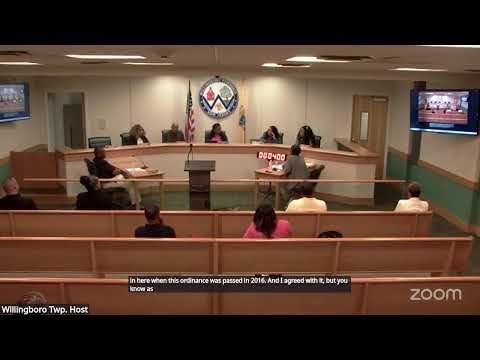
Willingboro adopts performing arts center utility after heated debate over manager role and contractor payments
Summary
The Willingboro Township Council approved an ordinance establishing a municipal performing arts center utility that allows the township to collect and spend center revenues; the vote followed extended debate over staffing, salary language and prior payments to a contractor who helped finish the venue.
The Willingboro Township Council voted to adopt Ordinance 26‑17, creating a municipal performing arts center utility that will allow the township to collect ticket, concession and rental revenues and use them to cover related expenses.
The ordinance passed after a public hearing and council debate about whether the utility should establish a full‑time manager position with salary and benefits. Mayor Merrick Whitfield and Township Manager Harris said the utility is intended to make the performing arts center self‑liquidating — “every dollar that it takes in should pay for every dollar of expense,” Harris said — while opponents warned the measure would create new recurring costs for taxpayers.
Councilwoman Rebecca Perrone voted against final adoption and repeatedly pressed Harris for precise salary figures and for evidence that recreational staff could not manage center operations. Perrone repeatedly argued the township already pays recreation staff and questioned paying a separate manager and health‑care benefits. She challenged the administration to explain where prior payments had gone for the center’s programming and contracting.
Harris defended the need for the utility and a dedicated management structure, saying the municipality had consulted auditors and the Department of Community Affairs and was advised that a performing arts utility (rather than a trust) would allow immediate use of revenues to cover center expenses. He said the utility’s manager role is meant to oversee operations, programming, box office and contract authority: “We felt that it was best for the township to move forward with a performing arts utility… enabling the performing arts center to become a self liquidating utility,” Harris said.
Deputy Mayor Dr. Worthy said a dedicated manager would cultivate performances and technical vendors, arguing the center needs staff experienced with sound and lighting to attract recurring, revenue‑generating shows. Councilwoman McIntosh sought clarity on salary totals and on transparency around contracts and prior spending.
The debate also revived council questions about Duckett Entertainment, a vendor the township contracted for programming and festival services. Council members asked for details on roughly $456,000 in payments tied to multi‑year work for the center and related events; Harris and the mayor said those amounts included pass‑through payments to artists and expenses for production and that Duckett played a role resolving construction and technical issues when engineering problems delayed completion. Mayor Whitfield said Duckett helped get the center to certificate of occupancy after disputes with the project engineer and procurement issues with curtains and sound equipment.
The council closed the public hearing and adopted the ordinance by roll call, with Councilwoman Perrone voting no and the remaining present members voting yes. Officials said the salary for any manager will be established through the salary ordinance and that the council will monitor the utility’s performance and revenues to ensure it is self‑sustaining.