Get Full Government Meeting Transcripts, Videos, & Alerts Forever!
Get email alerts on the State Legislation topic
No spam. Unsubscribe anytime.
Lobbyists brief Beltrami County on 2026 legislative outcomes and local impacts
Summary
County lobbyists summarized the closely divided 2026 legislative session, highlighting $300 million in cuts affecting human services, bonding money for roads and bridges, a property‑tax relief credit, SNAP administrative aid shortfalls, and grants for IT modernization and hospital stabilization that will affect county budgets and priorities.
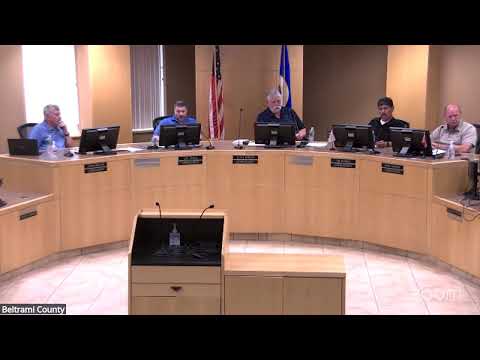
Lobbyists from Flaredy & Hood told the Beltrami County Board on Friday that the 2026 Minnesota legislative session produced a mix of wins and funding pressures for counties. Lily Hajazi Sakai and Darren Lee said the session—held in a narrowly divided legislature—passed dozens of chapters of law but also included about $300 million in reductions targeted at human‑services spending.
"There was $300,000,000 in cuts to human services," said Lily Hajazi Sakai, summarizing the fiscal pattern that will shape county programs and budgets. She and Darren Lee said counties should prepare for ongoing cost‑shift pressures and monitor the November and February fiscal forecasts that will refine out‑year projections.
Why it matters: The lobbyists said the session included bonding and targeted capital items that benefit local infrastructure—47 million for the Local Road Improvement Program and 25 million for a local bridge replacement program among them—but that the human‑services cuts, SNAP administrative shortfalls and other cost shifts will create new pressure on county budgets.
Darren Lee outlined items the county should watch: windstorm recovery funding that had a hearing but faced executive opposition, an effort to reform property‑insurance appraisals that met insurance‑industry resistance, and an IT modernization pot that includes $10 million in county‑eligible systems funding administered through a new grant and overseen by an IT modernization board.
"That $10,000,000 to update systems used by counties…that money is available till 2031," Lee said, noting the grant process remains to be defined.
They also flagged SNAP administrative and benefit cost‑share changes tied to federal HR‑1 implementation, saying state aid (a one‑time $10 million appropriation) will not fill the full gap counties face and that implementation timelines could affect Beltrami budgets starting in fiscal 2027.
What the Board may do next: The lobbyists recommended county engagement with lawmakers and state agencies on windstorm recovery and property‑insurance proposals, continued coordination with AMC and MACSA on SNAP solutions, and preparation to apply for IT modernization grants once application guidance is posted.
The presentation closed with a request for direction on which commissioners should join outreach and a plan to return with more detailed recommendations for the 2027 session.