Get Full Government Meeting Transcripts, Videos, & Alerts Forever!
Get email alerts on the Bylaws Review topic
No spam. Unsubscribe anytime.
Butte City rules committee reviews bylaws; outside reviewer flags emergency-notice, public-comment and voting issues
Summary
An MSU-affiliated reviewer told the Butte City rules committee on July 1 that while the bylaws are broadly sound, they contain provisions that may conflict with state law or weaken public participation — notably emergency-meeting notice language, the absence of electronic-participation rules, requirements to publish addresses for public commenters, and unclear presiding-officer voting rules.
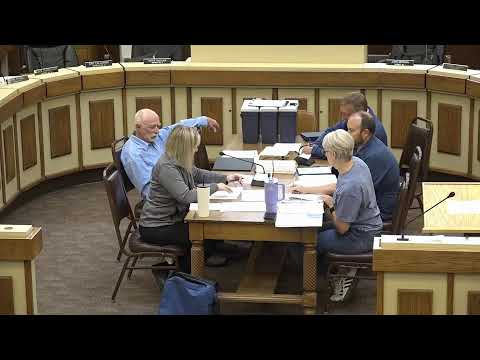
Chairman Shea called the Butte City rules committee to order on July 1 and introduced Ashley Kent, associate director of the Local Government Center at Montana State University in Bozeman, who presented an initial review of the city's bylaws.
Kent told the committee the bylaws are "by and large... still sound," but she identified several "red flag" items that she recommended be sent for legal review and clarified. She said one high-priority addition would be an electronic-participation policy that defines when and how commissioners may attend or vote remotely. "One area that I think would be worth adding now is electronic participation," Kent said.
Kent warned that language in the bylaws permitting emergency meetings with 24 hours' notice could be inconsistent with state law and the public's constitutional right to participate. She cited the statute referenced in the discussion ("2-3-103") and said state case law tends to favor the public's access to meetings. "In statute, they say that an emergency is defined as imminent danger to health or welfare of property or life," Kent said, and she recommended the committee seek counsel to reconcile the charter, bylaws and statute.
Committee members and Kent also discussed the bylaws' provision that a presiding officer "shall decide all tie votes and have shall have no other votes." Kent explained that, in many Montana jurisdictions, a presiding legislative member typically retains their legislative vote and may also break ties when presiding; the transcript shows members expressing concern that a temporary chair could effectively reduce a constituency's representation or, conversely, wield outsized influence when able to both vote and break ties. Members noted the charter's 60-day limit for filling vacancies mitigates long-term effects, but asked for clearer language to avoid ambiguity.
Kent recommended removing the requirement that members of the public supply an address when signing up for public comment and suggested replacing the word "citizen" with "member of the public" to reflect the constitutional right of participation. Chairman Shea said he understood the privacy concern, noting that agenda communications for appointments currently include the appointee's address and that staff would need to handle residency verification if required by appointment rules.
Kent flagged another legal concern about a bylaw phrase allowing an ordinance or resolution to be passed in the same meeting by a two-thirds vote. She said most communities require two separate readings or a 30-day window before an ordinance takes effect; where the charter grants self-governing powers the interpretation can vary and merits legal review.
Throughout the meeting Kent also pointed out several internal cross-references and numbering issues in the bylaws that appear to have shifted after public comment language was added in prior edits; commissioners acknowledged the value of institutional memory in resolving those linkage issues.
The committee agreed to take Kent's notes under advisement and asked her to send the materials she referenced. Chairman Shea said the members would review the suggested revisions and schedule a follow-up rules-committee meeting. The session concluded with a motion to adjourn and a voice vote in favor.