Get Full Government Meeting Transcripts, Videos, & Alerts Forever!
Get email alerts on the Infrastructure And Environment topic
No spam. Unsubscribe anytime.
Stockbridge Bowl dam inspections underway; tree‑removal, environmental permits likely to shape repair costs
Summary
Town staff told the Select Board that initial dam inspections and surveys are complete and a hydrology study is next; state dam‑safety requirements to remove trees from the dam toe and required environmental permitting could raise repair costs substantially.
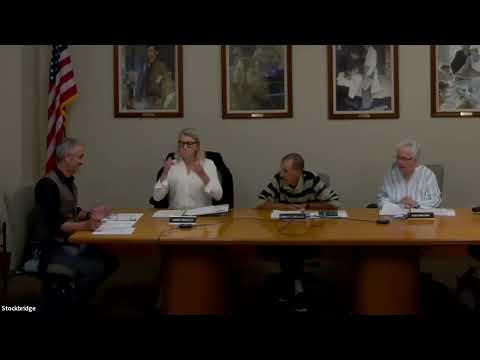
Town staff updated the Stockbridge Select Board on June 18 about the Stockbridge Bowl dam project and related dredging work, saying inspections and early fieldwork are complete and the town will proceed to hydrologic analysis and design work.
Staff reported that consultants have reviewed existing documents and finished visual inspections, and that wetland delineation and topographic surveys are under way. "We're in the first couple of phases of the dam inspections," the staff member said, noting the next contract will cover hydraulic and hydrological studies that will guide design.
Staff highlighted a potential conflict between dam safety and wetland protections: dam safety guidance requires removal of brush and trees back approximately 10 feet from the toe of the dam to reduce the risk that a falling tree and its roots could undermine the dam. The staff member said that complying with both dam safety and wetland protection could be challenging and will require coordination among agencies. On cost, staff described the tree‑removal, root extraction and embankment fill work as a substantial item, characterizing it as "something like a quarter of $1,000,000 project," and cautioned additional environmental checks will be required before work proceeds.
On dredging, staff said three preparatory steps have been completed: conservation committee approvals for isolated vegetative wetland work, verification there is no rocky ledge at Bullard Woods where geo‑tube access is planned, and an archaeological assessment. The town will next file MEPA materials, advance designs to about 70% completion, file a notice of intent with the conservation committee, submit a Chapter 91 application, make an NHESP filing, and seek water quality certification and a stormwater pollution prevention plan. Staff warned that funds devoted to dredging and related design work will be depleted and that any continuing work in fiscal 2028 will need additional appropriation.
Why it matters: the dam is classified as a high‑hazard structure; addressing both structural safety and environmental protections will shape the timing and cost of repairs and dredging.
What’s next: staff will complete hydrology studies, reconcile dam‑safety and wetland requirements with permitting agencies, and prepare funding requests for later fiscal years if needed.