Get Full Government Meeting Transcripts, Videos, & Alerts Forever!
Get email alerts on the Public Safety Budget topic
No spam. Unsubscribe anytime.
Douglas County sheriff urges funding for court security, deputies and IT amid rising jail costs
Summary
Sheriff Jay Armbruster told commissioners on July 7 that the sheriff's office needs new deputies, expanded court security staffing and IT support in the proposed 2027 budget, citing higher medical and mental‑health costs, federal authentication mandates and increasing vehicle and technology expenses.
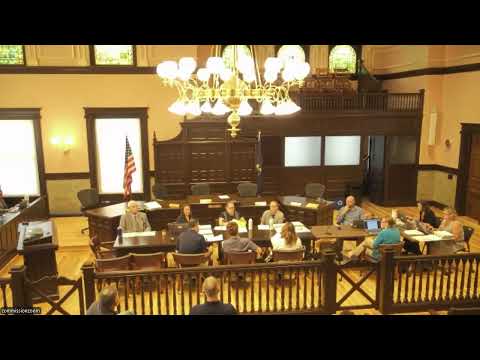
Sheriff Jay Armbruster told the Douglas County Board of County Commissioners on July 7 that the sheriff’s office is seeking funding in the proposed 2027 budget to shore up court security, hire remaining deputy positions and add IT support to meet operational and technology demands.
At a one‑hour presentation, county criminal justice coordinator Katie Fitzgerald said the sheriff’s office had requested four deputy positions last year and the county added two to the 2026 budget; the remaining two deputies are included in the administrator’s 2027 proposal. Fitzgerald also confirmed a supplemental request for an additional IT support position that was not fully funded in 2026.
“Last year in the budget request, the sheriff’s office had four deputy positions… we were able to include two of those positions last year in the 2026 budget, which left the remaining two positions to provide kind of the full security needs for our new courthouse when it opens,” Fitzgerald said.
Why it matters: Commissioners were repeatedly told the sheriff’s operating costs have risen because the jail population now includes a smaller, more resource‑intensive group of people with medical and mental‑health needs, and because new technology and contract expenses require recurring licenses and equipment. Those drivers make trimming the sheriff’s budget difficult without curtailing services.
Armbruster described staffing and capacity: “We are now out of 181 funded employees. I believe we’re less than 10 short,” he said, adding that the office has worked to reduce turnover after a recent pay increase. Commissioners repeatedly raised concerns that a high number of people awaiting out‑of‑county placement for competency or treatment reduces local capacity and increases staffing strain. Fitzgerald said, “As of yesterday, we have 8 who are actually out of the facility in various treatment settings, and we have 16 that are waiting for Larned.”
Undersheriff Stacy Simmons reviewed equipment‑reserve lines and explained how those accounts pay for IT hardware, vehicle replacement and one‑time jail capital needs. Simmons told the commission an upcoming federal multifactor‑authentication mandate will create additional license and hardware costs for agencies using the Spillman network: “There is another federal mandate coming down for an additional multifactor identification, which we did put in for this year’s budget, and it’s quite expensive,” she said.
Commissioners asked for specifics on several lines. On jail medical costs, staff clarified the total covers multiple obligations — mental‑health contracts (Bert Nash/Burton–Bert Nash), medication‑assisted treatment and the turnkey medical services contract — and confirmed the combined medical contract line is $1.7 million in the current materials.
Court security was a focal point. Commissioners asked how added court deputies would change public safety in the courthouse and the sheriff’s promotion pipeline. Armbruster said adding a lieutenant and deputies to court security would improve supervision and allow the department to promote corrections officers into deputy roles and then into patrol and investigative work. He also noted part‑time court deputies are certified and have full jurisdiction while on duty but cannot leave the checkpoint unmanned, limiting their response options.
On cost drivers, the sheriff and staff listed personnel (training and pay), vehicle replacement and outfitting, and recurring technology and licensing fees — including the department’s Axon contract for body‑worn cameras — as major upward pressures on the budget. Staff said those items, together with higher medical and mental‑health contract costs, account for much of the increase in the sheriff’s operations budget.
Armbruster and staff also described local reentry partnerships that have helped keep people out of jail or move them into treatment: they singled out Bert Nash, Cardinal Housing Network and Artists Helping the Homeless for providing beds and reentry support. The sheriff said the county has funded beds through Cardinal when needed but deferred precise expenditure figures to reentry program staff.
On competency restoration, the sheriff described a limited local program that treats lower‑acuity, medication‑compliant people in partnership with behavioral‑health providers and the courts. He warned that expanding into more intensive clinical interventions, such as forced medications, would require medical and judicial authorization and additional resources.
The hearing closed with the chair thanking the sheriff’s delegation and calling a five‑minute break. Commissioners asked staff to provide the comprehensive updated budget packet with a clear log of changes ahead of Thursday’s deliberations.