Get Full Government Meeting Transcripts, Videos, & Alerts Forever!
Get email alerts on the Temporary Housing topic
No spam. Unsubscribe anytime.
Ferrysburg council pauses enforcement to allow temporary on-site housing for storm-damaged homeowner
Summary
The council agreed to pause enforcement and allow a resident to place temporary on-site housing for up to three months while staff and the planning commission draft an ordinance and require a site plan and utility hookups, after a resident described asbestos and prolonged repairs to his home.
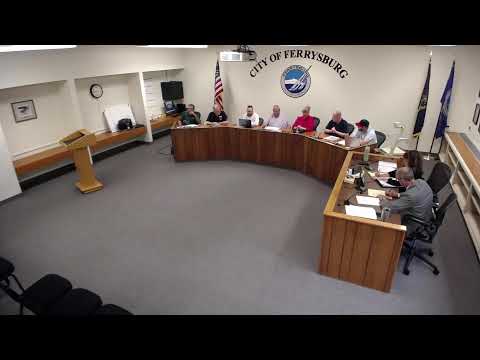
Ferrysburg — The City Council agreed June 16 to pause enforcement of its zoning prohibition on on-site temporary housing so a resident who suffered storm damage can place a camper on his property while repairs proceed.
Travis Andrews, who told the council his home sustained damage and an asbestos finding, said he and his family need a place to live while contractors perform abatement and reconstruction. "We don't really wanna live out of a hotel for a period of months," Andrews said, describing the challenge of housing a small child and a dog during prolonged repairs.
City staff said the current zoning does not permit RVs or campers as temporary dwellings. Craig (city staff) told council that staff would "have to track it," request a zoning permit and a site plan that shows hookups for water, sewer and electricity, and review compliance with a drafted ordinance. He said staff would likely use a draft ordinance provided to the city as a base.
Council members expressed support for a narrowly tailored, emergency-only approach. One councilmember said a future ordinance should prevent permanent or abusive use of the exception (for example, subleasing or long-term placement unrelated to damage). Staff said the council's consensus was to "pause enforcement" and refer the matter to the planning commission to draft an ordinance; the city also asked the applicant to provide a site plan and details of hookups and utility arrangements.
Council and staff described practical safeguards: a site plan showing placement and utility connections, limits on duration (the council discussed up to three months in this instance), and monitoring/inspections to verify proper installation. Staff said the applicant would need to show how sewer, water and electricity would be responsibly connected; the applicant said contractors and rental firms would provide certified hookups and, if needed, licensed plumbers or electricians.
The council treated the action as a temporary, case-specific accommodation while staff prepares a draft ordinance and the planning commission takes up the matter for a potential long-term rule change.