Get Full Government Meeting Transcripts, Videos, & Alerts Forever!
Get email alerts on the Land Use topic
No spam. Unsubscribe anytime.
Oregon City weighs adding a discretionary review path to geologic-hazards code; staff to focus revisions on Section 17.44(L)
Summary
Staff briefed the commission on mapping, exemptions and standards in the city’s geologic-hazards code and asked whether to clarify Section 17.44(L) to allow a discretionary (type 3) alternative to clear-and-objective standards; commissioners favored clarifying L and retaining third-party engineering review.
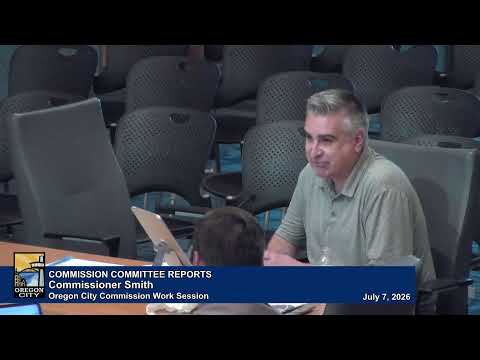
City planning and public-works staff presented a technical briefing on Oregon City Municipal Code Chapter 17.44 (geologic hazards) at the July 7 work session and asked the commission whether it wants code-cleanup work focused on Section 17.44(L).
Assistant City Engineer Josh Wheeler summarized the code history, mapping methods (lidar-derived slopes and DOGAMI landslide deposits), exemptions and current development standards — including slope thresholds (25%), buffers (50–200 feet depending on hazard type), density limits and disturbance caps. He told the commission the purpose of the staff presentation was to seek direction about an ambiguous clause in Section L that staff and recent land-use appeals have interpreted differently.
Section L ambiguity: Wheeler said Section 17.44(L) currently allows a “review authority” to determine whether a project is feasible and to consult a city geotechnical engineer, but the zoning-definition section does not define who that review authority is. The ambiguity has led to different interpretations: staff’s reading is that Section L permits development when standards can be met and findings provided; an alternative reading is that it allows a review authority to override the numeric standards if the authority finds proposed geotechnical remediation adequate.
Commission and staff views: Commissioners debated whether to preserve a clear-and-objective path (mandated under state law for housing applications) and add a discretionary alternative that would be a higher-level review (type 3, planning-commission level and appealable to the city commission). Commissioner Adam said he favored the latter, provided that the city retains third-party engineering review and clear criteria to limit discretion. Commissioner Rocky and other commissioners emphasized caution and recommended that any discretionary path include minimum guardrails and retained third-party review so the option is not a vehicle to circumvent safety standards.
Staff recommendation and next steps: Staff asked whether to proceed with code revisions focused on Section L (rather than opening the entire Chapter 17.44). The commission directed staff to draft clarifying language for Section L that establishes a discretionary alternative path with clear criteria, retains third-party geotechnical review paid by applicants, and sets the decision as a type 3 review so it remains appealable. Staff said it will return with specific code language and proposed review criteria for further consideration.
No formal ordinance change was adopted at the work session; staff will prepare draft code amendments and supporting materials for future hearings.