Get Full Government Meeting Transcripts, Videos, & Alerts Forever!
Get email alerts on the Stormwater Fee topic
No spam. Unsubscribe anytime.
Victoria council discusses stormwater fee options, majority signals support for $5 flat rate and religious exemption
Summary
Council discussed a proposed stormwater utility designed to raise about $2.6 million annually to fund $130 million in stormwater projects; staff presented options (flat $5 fee, $4 fee, or tiered rates) and council members signaled majority support for a $5 flat fee with a 100% discretionary exemption for religious institutions, with final action targeted for September and implementation Jan. 1, 2027.
Victoria City Council spent the largest portion of its July 7 meeting debating how to structure a proposed stormwater utility intended to fund long‑deferred drainage projects.
City manager Garza and staff told the council the program is designed to raise about $2,600,000 annually for stormwater infrastructure and that the consultant’s preliminary plan used a flat $5 monthly residential fee plus impervious‑cover calculations for nonresidential properties. Staff presented alternatives — lowering the residential fee to $4 or adopting a tiered residential structure based on measured impervious cover — and asked for council direction on whether to allow discretionary exemptions, particularly for religious institutions.
The discussion mattered because staff said the city faces an estimated $130 million in stormwater projects and wants a dedicated revenue stream to address repairs and improvements. “We’re basically suggesting bringing in about $2,600,000,” a staff presentation said, and staff recommended relying on the appraisal district’s classification to adjudicate discretionary religious exemptions to avoid creating an ad hoc local test.
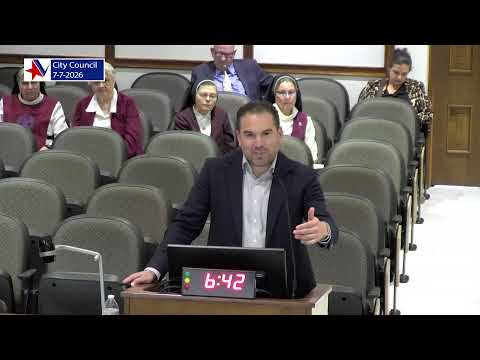
Residents who spoke during public comment urged caution and fairness. James Wearden asked why the City of Victoria and the school district would be exempt and questioned the equity of charging the same fee for older, low‑income properties and large newer homes. Council members divided over trade‑offs: several favored keeping the $5 flat fee to minimize administrative burden and to preserve revenue assumptions for the budget, while others pushed for a tiered approach to better align charges with impervious cover.
Mayor Dwayne Crocker summarized his view: “I’m for a flat fee, $5, to eliminate the administrative burden and the cost, and I’m a 100% for the religious exemption at a 100%.” Other council members said they supported a 100% discretionary exemption for religious institutions if the appraisal district’s classifications are used to determine eligibility; at least one council member said they preferred no exemptions.
Staff presented estimated revenue impacts: a $1 decrease to $4 would reduce projected revenue by roughly $531,000; a 100% exemption for religious institutions would reduce revenue by about $105,000, staff said. Officials also noted adopting tiering would add administrative work to identify and manage parcels based on measured impervious surface.
Next steps: staff said council direction this evening would inform revisions to the proposed budget and that the city aims to advertise the ordinance and seek final approval in September so the fee could take effect Jan. 1, 2027. Council offered informal majority support for a $5 flat fee coupled with discretionary religious exemptions defined by the appraisal district, but the body did not take a formal vote and will revisit the item as staff refines the ordinance and budget language.