Get Full Government Meeting Transcripts, Videos, & Alerts Forever!
Get email alerts on the Mental Health Jail Costs topic
No spam. Unsubscribe anytime.
Officials: mental-health needs and state capacity strain Douglas County jail budget and services
Summary
Sheriff and staff told commissioners that a rise in resource-intensive, mentally ill inmates, delayed state placements and limited state-hospital capacity are increasing costs and stretching the county jail; they highlighted local partnerships and a limited competency-restoration pilot with Bert Nash as mitigation.
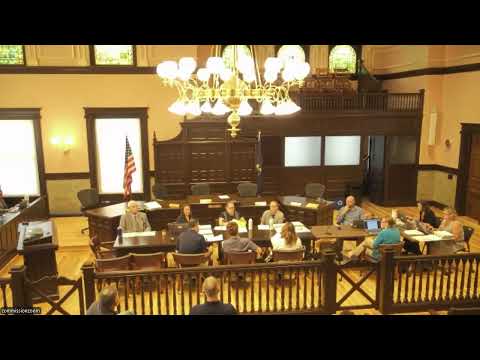
Sheriff Jay Armbruster and county staff told the Douglas County Board of Commissioners that an uptick in individuals with serious mental illness in the jail, combined with limited capacity at state hospitals, is increasing per-inmate costs and operational strain.
“We have 16 that are waiting for Larned or oswetamine,” Katie Fitzgerald said, describing the current count of detainees awaiting transfer to state facilities. Armbruster said those individuals are among the most resource-intensive and that the county must allocate extra staffing, overtime and medical care when local placements are unavailable.
Commissioners and staff discussed how state policy and staffing shortages at state hospitals (KDADS facilities) can limit transfer options and force the county to provide longer-term custody and care, which can include extended stays for people with dementia or severe mental illness. As one staff member noted, an Alzheimer’s patient spent four months in the county jail because there was nowhere appropriate to place her.
Sheriff Armbruster and partners described existing community reentry supports—Bert Nash, Cardinal Housing Network and Artists Helping the Homeless—as critical to diverting people from jail and to successful reentry. Armbruster said the sheriff’s office has, at times, funded bed availability with Cardinal to make beds available when someone is “ready and able to go to treatment.” He deferred exact dollar amounts to the reentry director but confirmed the sheriff’s office has provided short-term support to keep beds available.
Armbruster described a county competency-restoration effort that prioritizes lower-intensity, medication-compliant individuals in partnership with Bert Nash and the courts; he said that approach has been able to move 10–15% of people off the waiting list into local restoration but cannot substitute for state-hospital capacity when higher-security interventions or court-ordered forced medication are required.
The commissioners asked staff for more precise numbers on out-of-county housing fees and the costs the sheriff’s office has borne for partner organizations; staff agreed to follow up with detailed figures. No policy action was taken during the session; commissioners requested more documentation to guide budget deliberations.