Get Full Government Meeting Transcripts, Videos, & Alerts Forever!
Get email alerts on the Landfill Permit topic
No spam. Unsubscribe anytime.
Alamance commissioners delay decision on proposed Clap Mill LCID landfill after lengthy public comment
Summary
After more than an hour of public testimony both for and against a proposed land‑clearing and inert‑debris (LCID) landfill on Clap Mill Road, the Alamance County Board of Commissioners deferred a final decision to April 20 to allow additional review and targeted responses to planning‑director materials and safety questions.
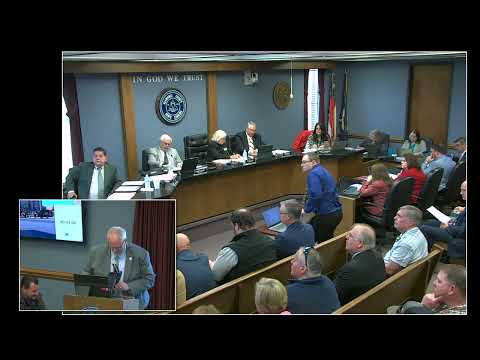
Alamance County commissioners on April 6 delayed a decision on an intent‑to‑construct permit for a proposed land‑clearing and inert‑debris (LCID) landfill on Clap Mill Road, saying they needed more time to weigh traffic, air‑quality and process concerns raised by neighbors.
The public comment period was dominated by neighbors who said the proposed site and related activity — including a separately filed wood‑processing application — were not fully disclosed. "The community has a right to understand the full scope of what's going on in their backyard," said Carol Davis, an adjacent property owner, who told the board she found a 60‑plus page North Carolina Department of Environmental Quality filing describing wood grinding, mulching and use of an air‑curtain incinerator at the same address and said those operations were omitted from the landfill application.
Supporters of the project also spoke. "This is something that serves every municipality around here locally, and it's a benefit," said David Wren, who identified himself as a lifelong resident and friend of the applicant. Pastor Jay O'Dell said his congregation had not experienced ash or debris on property and urged the board to approve the permit.
County planning director Matthew Hoagland reviewed the UDO compliance schedule and civil site plan for the commissioners, taking the board through the ordinance checklist (sections 6.5.0.1–6.5.0.4), buffers, wetland and heritage letters, and the traffic‑impact analysis. Hoagland said the applicant's TIA estimated roughly 77 truck trips per day associated with landfill operations and that NCDOT had indicated near‑term actions including a speed‑limit change to 45 mph, truck‑entering signs and resurfacing and partial widening of Clap Mill Road.
Commissioners pressed staff on TIA assumptions and safety. One commissioner highlighted the wide discrepancy among speakers who reported seeing two trucks in ordinary observation versus the 78 truck trips referenced in public comment materials and asked for specific rebuttals to the planning‑director presentation.
After hearing the applicant's representative describe planning‑board review and site visits (the planning board had recommended approval 6–1), Commissioner [name not specified in the record] moved to defer consideration to the board's April 20 meeting to allow focused responses to the presentation and to give both sides an opportunity to meet and prepare for rebuttal. The board approved the deferral by voice vote.
What happens next
Deferral does not change the administrative review track: staff will continue to collect materials and the applicant would, if later approved, move to the operations‑permit phase under state and local oversight. Commissioners did not commit to any outcome, and several members said they wanted time to vet safety and traffic evidence before making a final ruling.
The county's planning packet and appendices, which include the civil site plan, TIA, and correspondence with NCDOT, were cited repeatedly at the meeting; Hoagland said staff would forward planning‑board minutes and related materials to the commissioners for the April 20 meeting.