Get Full Government Meeting Transcripts, Videos, & Alerts Forever!
Get email alerts on the Subdivision Regulations topic
No spam. Unsubscribe anytime.
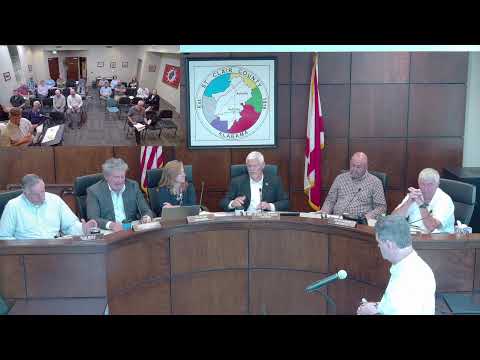
Saint Clair County work session debates draft subdivision regulations, focusing on lot sizes, septic systems and road standards
Summary
County commissioners spent a public work session reviewing a draft subdivision ordinance that proposes an 11,500-square-foot average lot size and an 8,000-square-foot minimum for individual lots, while some commissioners and residents urged a 15,000-square-foot minimum; the meeting included extended discussion of private sewer systems, 60-foot right-of-way requirements and 9-1-1 addressing. No vote was taken; staff and attorneys will revise the draft and schedule further public meetings.
Chair (S1) opened the called work session on the county's draft subdivision regulations, saying the document is intended to create county-level standards for lot sizes, roads, sewer systems and addressing and that the commission expects more revisions before adoption. "This is a called meeting of the county commission specifically to address our move towards having some kind of subdivision regulations," the chair said.
Dan Dahlke (S5), who led the presentation of the draft, walked commissioners and attendees through key provisions. The draft sets an "average" lot area of 11,500 square feet per lot in each phase of a subdivision and proposes that no single lot be smaller than 8,000 square feet unless a variance or exception applies. Dahlke said traffic and road safety, determined through applicant-paid traffic studies where warranted, were the primary drivers of the 11,500 figure.
The lot-size proposal drew sustained debate. A cluster of speakers representing municipalities, developers and landowners argued that a low minimum could make some projects infeasible and push developers to other counties; "if you do implement lot sizes that don't allow for development, then you are gonna miss the development," a development representative (Committee member, S9) said. Conversely, other speakers, including commissioners and long-time residents, urged larger minimums to reduce short-term stress on schools, police and fire services and to protect property values. One participant urged support for a 15,000-square-foot minimum to avoid infrastructure shortfalls in years when growth outpaces service capacity.
Public-services funding and schools featured prominently. Several officials noted that much property tax revenue flows to school systems, and that state funding "follows the child," meaning district enrollment increases drive added school funding but may lag the near-term costs of hiring, building or transporting students. Commissioners repeatedly said they were weighing the trade-off between encouraging development and avoiding bursts of growth that municipalities and school districts cannot immediately absorb.
Speakers also spent significant time on sewer and wastewater issues. The draft contemplates both municipal sewer and engineered private systems for higher-density subdivisions. County staff and private-sector operators explained that engineered private systems require state permitting and proof of funding for operation and repair; the Public Service Commission or state health department oversees larger treatment systems and injection systems. Commissioners discussed requiring per-lot perk tests and permitting rules to avoid future failed septic systems and long-term liability for homeowners and the county.
Road standards and right-of-way requirements were another central topic. The draft uses a 60-foot right-of-way as a standard (with some provisions allowing narrower rights-of-way or variances), and staff said those standards stem from typical pavement width, ditching and utility access needs. Several speakers warned that across-the-board dedications could raise constitutional and takings concerns if not tailored to the actual impact of a subdivision, and they warned that reliance on variance processing could delay projects and invite litigation.
Ashlyn Campbell (S7), the county's 9-1-1 addressing specialist, described addressing and road-naming requirements and said addresses must be assigned before plats are signed so emergency services can locate properties. Campbell noted that mobile-home parks and RV parks often require unit-level addressing and that the 9-1-1 office coordinates address assignments with municipalities and utilities.
The commission did not take a formal vote. Chair (S1) said staff and the county attorney will meet with outside land-use attorneys for legal review, and commissioners agreed to further public outreach and to post the draft online with a clear "draft" label. "We're gonna have subdivision regulations," the chair said, adding that the body will continue revising the draft until at least three commissioners can support it. The next public or work session will be scheduled after staff incorporates feedback and completes the legal review.
The county solicited comments from municipal officials, developers, public-safety personnel and residents during the session and signaled more opportunities for public input before any formal adoption.