Get Full Government Meeting Transcripts, Videos, & Alerts Forever!
Get email alerts on the Public Comment topic
No spam. Unsubscribe anytime.
Hundreds of parents, students and teachers urged Ann Arbor board to spare educators and preserve arts and environmental programs
Summary
During an extended public‑comment period, more than 140 speakers — including students, teachers, union leaders and environmental advocates — pleaded with the Ann Arbor board to avoid teacher layoffs and preserve music, arts and the Freeman environmental education program amid proposed budget cuts.
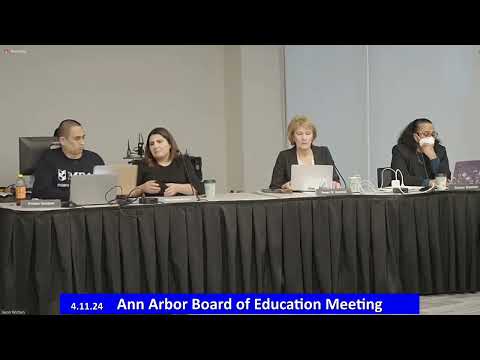
More than 140 community members spoke during the public‑comment period of the Ann Arbor Public Schools board meeting, urging trustees to protect teachers, arts and environmental education programs as the district considers multimillion‑dollar reductions.
Parents, students, teachers and union leaders repeatedly told the board that staff and core programs should not be the first targets. "Please preserve music and the arts education at AAPS fully," Christine Joseph told trustees. Community members pointed to petitions, PTO letters and volunteer networks; one speaker said over 1,000 parents had signed a petition to preserve music and fine arts.
Students and educators described concrete classroom impacts: a Skyline senior asked the board not to cut Latin and said such programs support vocabulary and college preparation; a fourth grader asked trustees to "Save teachers, staff, and specials; Save IB." Teachers and union leaders said layoffs would ripple across programs, increase class sizes and undermine the district’s ability to attract and retain staff.
Environmental education drew sustained defense. A Sierra Club Huron Valley Group representative and multiple volunteers described the Freeman Environmental Education Center and related programs as districtwide, long‑standing and integral to the bond commitments that voters approved. One volunteer said the EE program reaches more than 10,000 students annually and serves every school K–6.
Union and association leaders framed their comments as both defense and solution: the AAEA representative said the educator Blue Ribbon team has submitted non‑personnel cost‑savings recommendations and urged the board to incorporate those before authorizing staff cuts. Speakers asked the board for better transparency on the district's central‑office spending, vendor contracts and recent purchases; one parent flagged publicly posted purchasing‑card records for March showing roughly $52,000 in hotels and $16,000 in restaurants as examples of items the community suggested cutting before staff reductions.
Trustees and the superintendent heard repeated requests to slow the process so that staff bargaining units have a real seat at the table. Multiple speakers asked that the district prioritize non‑personnel reductions and broader community ideas, including restoring before/after care to boost enrollment and considering targeted property or one‑time assets sales as part of a balanced package.
After public comment, the board continued debate on the corrective action plan and eventually voted to authorize the superintendent to include possible staff reductions in the state plan if necessary; trustees and the superintendent said they would continue community and staff engagements while developing detailed recommendations.
Ending: The superintendent scheduled a series of engagement meetings (virtual and in person) to solicit staff and public input; any specific proposals that would affect teachers or programs were to be returned to the board for review before implementation.