Get Full Government Meeting Transcripts, Videos, & Alerts Forever!
Get email alerts on the Municipal Finance topic
No spam. Unsubscribe anytime.
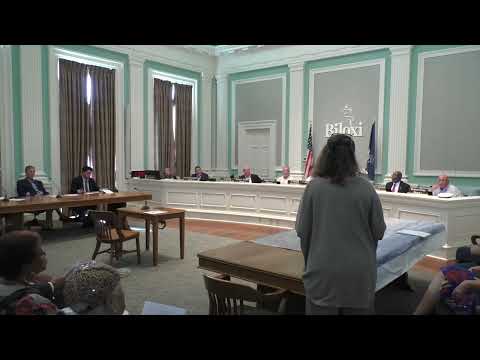
Council approves $16.5 million bond after heated debate over East Biloxi grocery store
Summary
After extended public comment calling for a grocery store in East Biloxi, the Biloxi City Council approved a $16.5 million general obligation bond on a 4-3 vote, amid disagreement over whether bond money or other financing tools should be used to acquire land and incentivize grocers.
A sharply contested vote on a general obligation bond ended with the Biloxi City Council approving an amended borrowing limit of $16,500,000, after hours of debate over priorities including roofs and generators for city buildings, drainage repairs and long-standing calls to bring a grocery store to East Biloxi.
Councilman Anthony Marshall led the push for a larger bond, arguing the measure was necessary to assemble land and incentives that would attract a grocer to the city’s food‑desert neighborhoods. “Twenty percent of this city is living in a food Desert,” Marshall said, urging colleagues to approve more borrowing to acquire and prepare a site that would entice a store to locate in East Biloxi.
Supporters of a larger bond said the additional money would allow the city both to repair critical municipal infrastructure and to commit resources that would make a grocery project shovel-ready. Opponents warned against expanding the borrowing beyond earlier council guidance and said other financing tools — notably tax-increment financing (TIF) and targeted incentives — are better suited for land acquisition and retail development.
The mayor and administration officials described the bond figure as a funding reservoir. The city’s financial adviser told council members the jurisdiction had debt capacity to support larger borrowing and that using a mix of minor funds and grant matches could reduce millage impact. Legal counsel cautioned that general obligation (GO) bond proceeds cannot be used to buy land expressly for a private grocery store; GO bonds can, however, fund public infrastructure — streets, sidewalks, intersections and lighting — that could support development.
Council members proposed and voted on several amendments. A motion to raise the amount to $18 million failed. Subsequent amendment proposals — including $5 million and $10 million alternatives — failed. The council adopted a 16,500,000 amendment on a 4-3 vote and then approved the amended resolution by the same margin.
The vote authorizes an amended GO bond amount; the council will still approve specific projects and allocations by separate resolutions as administration presents them. Proponents said passing a larger number now creates flexibility to secure matching grants and address construction cost inflation, which they said is increasing project costs annually. Opponents said the council earlier agreed on a $10 million target and that exceeding it risks unanticipated commitments and shifts in priorities.
The council’s action followed an extensive public comment period in which residents, pastors and community leaders urged investment in East Biloxi. Hope Spencer, a resident, asked the council to “make East Biloxi a priority by supporting the funding and partnerships needed to bring a grocery store back to our community.”
What comes next: the mayor and administration will return to the council with specific project resolutions and contract awards for approval. Legal counsel and finance staff said they would continue to explore grant matches and financing structures that could stretch bond proceeds and limit ongoing debt service impacts.