Get Full Government Meeting Transcripts, Videos, & Alerts Forever!
Get email alerts on the Battery Energy Storage topic
No spam. Unsubscribe anytime.
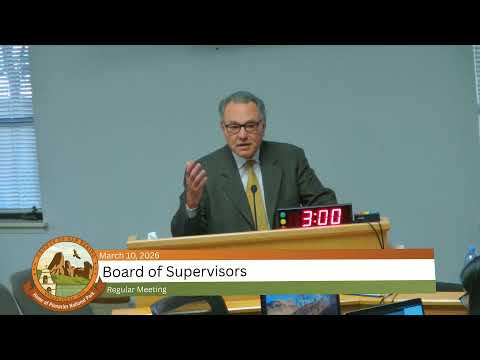
Board enacts 45‑day moratorium on battery storage projects, orders local standards work
Summary
Following public comment and a lengthy debate about fire and farmland risks, the board approved a 45‑day moratorium and directed staff to draft development standards and a public‑outreach plan before new battery energy storage applications are processed.
The San Benito County Board of Supervisors voted 4‑1 March 10 to adopt a 45‑day interim moratorium on the acceptance, processing and approval of battery energy storage system (BESS) applications in the unincorporated county while staff prepares local development standards and public outreach.
Planning Director Abraham Prado told the board recent battery fires and community concern have highlighted gaps in local zoning and permitting for large utility‑scale storage facilities, and staff needs time to research best practices and coordinate with fire and environmental health agencies. "We need time to study and develop appropriate regulations," he said.
The proposal split the board. Supporters said a pause will preserve the status quo while the county builds locally tailored setbacks, fire response requirements, decommissioning and financial assurance rules. "If one thing goes bad, it's gone bad — we need to make sure we do this right," Supervisor Currow said, stressing protection for farmland and resident safety.
Opponents cautioned that an overly broad moratorium could push applicants to use the state permitting pathway, reducing local control, and could slow the county's progress on clean‑energy goals. Developers and the local Community Choice Aggregator urged the board to develop standards without halting application processing.
The final motion authorized a 45‑day moratorium, directed staff to compile a menu of development standards drawn from state and peer‑county models, scope consultant assistance, and return with a public outreach plan; the board also directed staff to invite applicants and industry stakeholders into the standards drafting process in an effort to avoid applicants proceeding directly to state permits.
Vote: 4‑1 in favor of the moratorium and staff direction (Supervisor Sotelo opposed). Staff estimated 45–60 days to produce an initial outline and more time thereafter to draft and finalize an ordinance.