Get Full Government Meeting Transcripts, Videos, & Alerts Forever!
Get email alerts on the Solid Waste topic
No spam. Unsubscribe anytime.
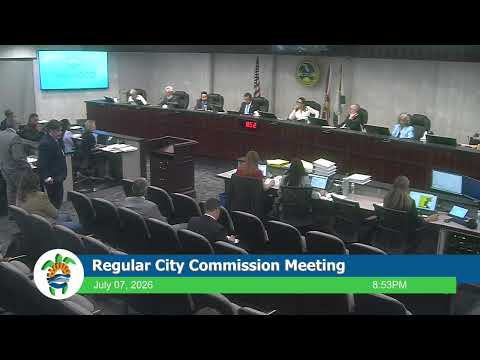
Commission gives conditional approval to join Broward Solid Waste Authority process after hours of debate
Summary
Hollywood commissioners gave conditional approval (6–1) to an interlocal agreement and a second 'opt‑out' amendment with the Broward Solid Waste Authority, a step that commits the city to participate in an RFP/pooled‑tonnage effort while preserving a one‑year opt‑out if pricing or terms do not meet city targets.
After a lengthy debate that included public health, environmental and municipal officials, Hollywood’s City Commission voted 6–1 to grant conditional approval to amendments to the Broward Solid Waste Authority (SWA) interlocal agreement.
SWA representatives and city staff said the amendments include a facilities amendment and an opt‑out amendment that allows municipalities to exit after a defined period if agreed pricing or targets are not met. Supporters argued pooled municipal tonnage and coordinated procurement will reduce price volatility, expand recycling and composting, and leverage better deals for construction and demolition diversion and commodity processing. Opponents and some commissioners pressed staff for more granular pricing analysis, asked how municipal hauling contractors would be affected and emphasized the need to preserve local control and procurement rights. City staff noted Hollywood’s current disposal contracts do not expire immediately (some end in 2028 and 2030) and that conditional approval keeps options open while staff participates in the SWA RFP process; the city can exercise the opt‑out if results are unfavorable.
The motion to approve the conditional interlocal amendments passed 6–1 with Commissioner Biederman recorded in opposition. Commissioners directed staff to remain active in the SWA technical and procurement process and to return with details on pricing scenarios and potential impacts to city hauling contracts and service levels.