Get Full Government Meeting Transcripts, Videos, & Alerts Forever!
Get email alerts on the Pesticide Policy topic
No spam. Unsubscribe anytime.
Advocates ask Beaufort County to adopt organic turf and parks policy
Summary
Kim Conte of Nontoxic Neighborhoods urged the committee to adopt organic land-management policies for parks, ball fields and medians, citing Hilton Head and Bluffton as local models, offering trainings and policy templates, and stressing child-health research about pesticide exposure.
A national nonprofit that promotes organic land-management policies urged Beaufort County to adopt a countywide approach for parks, playgrounds and medians to reduce pesticide exposures and protect children’s health.
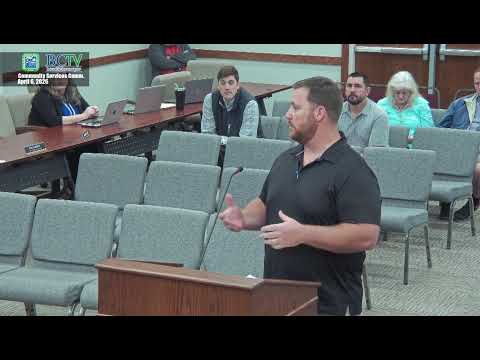
Kim Conte, founder of Nontoxic Neighborhoods, told the committee the group has worked with Hilton Head and Bluffton on organic policies and offered Beaufort County training, model contract language and staff support. "Roundup is the DDT of our generation," Conte said during the presentation, characterizing glyphosate and other commonly used chemicals as risks to children and wildlife and arguing counties can adopt fiscally sound, preventive alternatives.
Conte emphasized the difference between mosquito/vector control and park or roadside pesticide use, saying vector-control policies and tools are distinct from what would be used on ball fields and parks. She said the organization has partnered with Clemson and vector-control agencies on alternatives such as larval controls (including mosquito fish) and other low-cost measures that can reduce adulticide use. Conte also described municipal examples — Hilton Head and Bluffton — that implemented organic-first policies and said Nontoxic Neighborhoods can provide sample RFP/IFB language and contractor training.
Committee members asked for specifics about what the county currently uses and where early wins might be found. Several members expressed support but asked staff to bring a detailed inventory of current pesticide products, applications and departments that use them so the committee can identify low-cost, high-impact opportunities and evaluate vector-control constraints.
Outcome: Committee asked staff to compile usage data and return with a presentation identifying where the county can move quickest toward organic management and where state collaboration may be required (for example, in mosquito control).