Get Full Government Meeting Transcripts, Videos, & Alerts Forever!
Get email alerts on the Hate Intimidation topic
No spam. Unsubscribe anytime.
Committee advances county hate-intimidation ordinance and urges state action
Summary
After public comment urging countywide protections, the committee advanced a draft hate-intimidation ordinance to county council and unanimously adopted a resolution urging the South Carolina General Assembly to pass a statewide hate-crime bill.
Beaufort County’s Community Service and Public Safety Committee advanced a county ordinance to criminalize hate-intimidation and unanimously approved a companion resolution urging the South Carolina General Assembly to adopt a statewide hate-crime law.
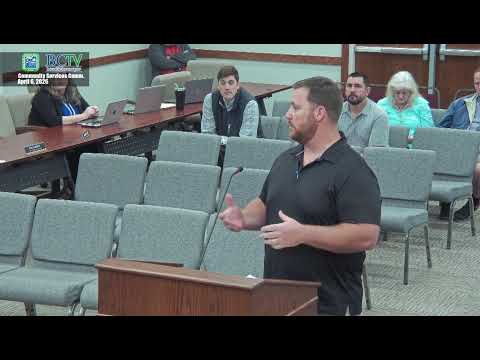
Public comment set the tone for the item. “We have a fractured landscape where justice is determined by a map,” Risa Prince, with the Lowcountry Coalition Against Tate, told the committee, urging passage of a county ordinance so that “every resident of the county receives equal protection under the law.” Prince cited municipalities that have adopted local hate-intimidation measures while state action has stalled.
Staff attorney Monica Maine said the draft ordinance in the committee packet is modeled on ordinances from other South Carolina municipalities but includes a critical change: the county version makes the new offense one that prosecutors “may” charge rather than imposing a mandatory charge. Maine said the discretionary language is intended to allow prosecutors and law enforcement to choose the most appropriate charging path and to avoid duplicative prosecution if a future state statute is enacted. An attorney-general opinion accompanying the packet was discussed but, Maine said, several municipalities had recently moved forward despite that opinion.
Committee members sought clarity on whether the county ordinance would operate as a standalone magistrate-level offense or primarily as an enhancement to underlying crimes. Maine and counsel explained that, as drafted, the provision can operate as a standalone county-level violation enforceable in magistrate court, and it also can function alongside other criminal charges when the facts meet the ordinance criteria.
After discussion the committee conducted a roll-call vote on the ordinance and the motion passed. The committee also adopted a resolution directing staff to send the committee’s recommendation to the county’s legislative delegation and the General Assembly, encouraging state lawmakers to pursue a comprehensive statewide hate-crime statute.
The ordinance and the resolution will next go to full county council for consideration; staff and counsel said they will provide packet materials and the accompanying attorney-general opinion to council members ahead of first reading.
What’s next: The ordinance will be placed on county council’s agenda for first reading; the companion resolution will be transmitted to the county delegation and the General Assembly to urge statewide action.