Get Full Government Meeting Transcripts, Videos, & Alerts Forever!
Get email alerts on the Public Safety Fire Code topic
No spam. Unsubscribe anytime.
Carbondale adopts updated fire code and the Colorado Wildfire Resiliency Code
Summary
Trustees unanimously adopted an updated municipal fire code (moving from a 1988 reference to the 2021 code with local amendments) and enacted the Colorado Wildfire Resiliency Code for mapped wildfire areas; the rules largely apply to new builds and substantial alterations in mapped areas.
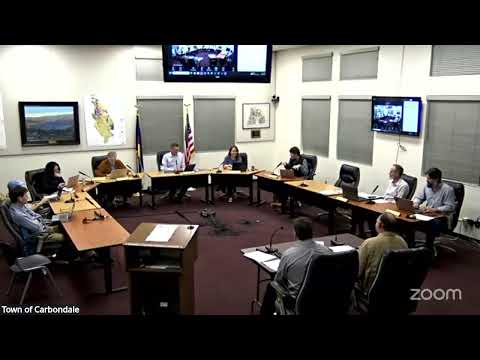
The Board of Trustees unanimously approved an ordinance on March 10 updating the town's fire code and adopting the Colorado Wildfire Resiliency Code for mapped wildfire areas.
Aaron (speaker 8), speaking for the town and fire district, said the update replaces the town's 1988 fire code reference with the 2021 edition and includes administrative and technical amendments to address modern technologies. "The biggest win being the energy storage systems of chapter 12," Aaron said, noting the newer code contains provisions for technologies that were not common when the old code was written.
The Wildfire Resiliency Code, required by the state for mapped areas, adds structural-hardening and defensible-space requirements for new construction and for substantial alterations in mapped zones; local staff will perform the "ground-truthing" reviews needed to determine whether individual parcels meet class-1 or class-2 resiliency standards. Officials emphasized the new rules mostly apply to new construction or to projects that exceed prescribed alteration thresholds.
Trustees moved and voted to adopt the ordinance as presented; the motion passed unanimously. Staff said the adoption will align town permitting with current state expectations and reduce long-standing internal conflicts where the town's code referenced a more recent fire code not formally adopted in the municipal code.