Get Full Government Meeting Transcripts, Videos, & Alerts Forever!
Get email alerts on the Local Tax Policy topic
No spam. Unsubscribe anytime.
Commissioners approve amendment clarifying building excise tax will be collected at occupancy, not permit issuance
Summary
The Board of County Commissioners voted 3-2 on March 24 to amend the county's building excise tax ordinance to (1) make clear the tax applies countywide including municipalities and (2) change collection from building-permit issuance to occupancy-permit issuance; commissioners debated fairness and potential enforcement against Leonardtown.
The Board of County Commissioners of St. Mary's County approved an amendment to the county building excise tax ordinance on March 24 that clarifies the tax applies within municipalities and changes the time of collection from issuance of a building permit to issuance of an occupancy permit.
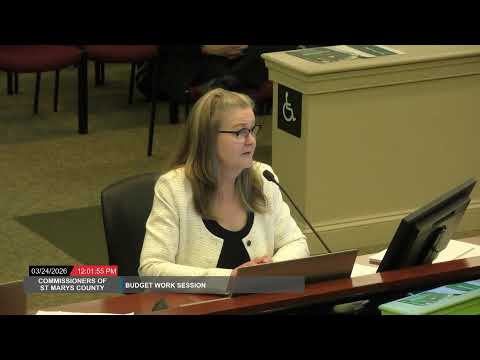
County Attorney Murphy Gidney told commissioners the change responds to a drafting error in the original ordinance and noted the amendments do not change the tax rate or allocation formulas. "The proposed amendments are 1) to clarify that the excise tax does apply in municipalities located within the county, and 2) it changes the time of collection of the tax from when the building permit is issued to when the occupancy permit is issued," Gidney said during the discussion.
Commissioners questioned how the change would play out if a municipality such as Leonardtown elected not to collect the tax. Gidney said that a board would first need to pass the ordinance and make it effective; only then could the county establish whether an occupancy permit had been issued without remittance of the tax and pursue legal remedies if necessary. She added that enforcement options and any litigation would be considered if and when they arise.
Opponents at the dais raised equity concerns about imposing the tax in some parts of the county while an incorporated town might exempt its projects. One commissioner argued the measure unfairly shifts costs and could increase mortgage debt for homebuyers because builders incorporate the charge into sales prices. Another commissioner urged cooperative approaches with municipal officials rather than imposing county authority.
The motion to approve the ordinance was moved, seconded and passed on a roll-call indicated in open session as 3 in favor and 2 opposed. The board recorded no separate roll-call breakdown in the public transcript; the clerk confirmed the motion and execution of related documents were authorized.
What happens next
The amendment becomes effective as adopted by the commissioners. County staff said they will work with municipal officials and legal staff on implementation and, if necessary, follow up about compliance and remittance procedures.
Why it matters
Changing collection to occupancy-permit issuance shifts the taxable event later in the construction process; that timing can affect cash flow for builders and the point at which local revenue is recognized. Clarifying that municipalities are within the ordinance's reach closes what county officials described as an earlier drafting omission but raised questions about local cooperation and potential legal disputes with towns that choose different collection approaches.