Get Full Government Meeting Transcripts, Videos, & Alerts Forever!
Get email alerts on the Charter Review topic
No spam. Unsubscribe anytime.
Charter review panel backs November elections and other modernizing changes; commission divided on mayoral term and financial oversight
Summary
The Charter Review Advisory Board recommended aligning city elections with November federal contests, adopting a nominating system in place of the current primary/runoff, and cleaning obsolete charter language. Commissioners debated whether to lengthen the mayor's term and whether financial oversight should remain independent or be consolidated under the city manager.
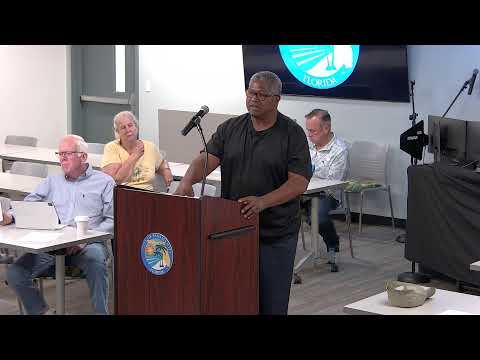
Brandon Berg, chair of the Charter Review Advisory Board, told the commission the panel's priority has been clarity and modernization of the city charter and that the board aims to present a package for the commission to consider by late summer and for voters in November. "We want something that the citizens will adopt," Berg said, adding the board has focused on incremental, not wholesale, changes.
The advisory board recommended aligning city elections with national (November) cycles to increase turnout, and replacing the current primary/runoff sequence with a nonpartisan nominating process that would yield a winner on election night. The board said that change would increase participation and reduce the length and cost of campaigns, though some commissioners warned that aligning with larger ballots can reduce attention to down-balloted races.
A central point of contention at the meeting was whether to change the mayor's two-year term to a four-year term aligned with higher-turnout elections. Supporters argued a longer term increases continuity and matches the cycle where turnout is highest; opponents raised concerns about ballot timing and whether some voters would consistently lack a mayoral race to draw them to the polls.
Another contested recommendation concerned financial oversight and the role of the clerk/treasurer. Cecile Scone, drawing on experience with military justice systems, urged keeping financial-reporting and oversight functions independent of the city manager to preserve checks and balances. "The majority of the work that the... auditors do reports to the commission," she said, calling independence a protection against undue influence.
Others urged operational efficiency and warned that consolidating finance under the city manager can speed day-to-day decision-making, while also recommending built-in protections if responsibility shifts (audit committees, whistleblower protections and an internal auditor). The board acknowledged there was not consensus on this issue and said it would present options and, where appropriate, alternative language for the commission's consideration.
Panel leaders and staff noted schedule constraints. The supervisor of elections needs finalized language and paperwork in time for the November ballot; staff said the commission would need to have final direction by the end of July to meet that deadline. Commissioners asked the panel to supply clear, prioritized options — including a version with the majority recommendations and alternative language where the panel was split — so the commission can deliberate without derailing the rest of the charter's proposed changes.
The charter review board plans at least one more meeting and will submit recommended language to the commission for review; any final charter changes would go to voters if the commission places them on the ballot.