Get Full Government Meeting Transcripts, Videos, & Alerts Forever!
Get email alerts on the Event Management topic
No spam. Unsubscribe anytime.
Highland Park council adopts public-safety events policy, directs city attorney to draft ordinance
Summary
The council approved a resolution establishing a public-safety events management policy and directed the city attorney to prepare a three-tier permitting ordinance for public events; members pressed for workshops and legal review over scope and charter conflicts.
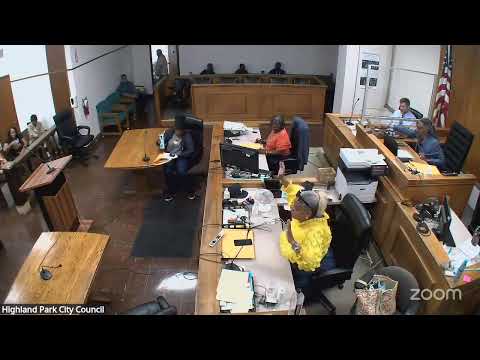
Council President Thomas read into the record a resolution establishing a public-safety events management policy and directing the city attorney to prepare a comprehensive public-safety events ordinance for Highland Park.
The resolution sets a three-tier classification for events: Tier 1 (neighborhood gatherings, generally under 50 attendees), Tier 2 (50–149 attendees), and Tier 3 (150 or more), and lists triggering conditions that would require a permit regardless of attendance — including street or sidewalk closures, amplified sound, temporary structures, vending, alcohol service, and requirements affecting emergency access. For Tier 3 events the draft ordinance directs review by a public-safety event review committee, recommendation by the planning commission, and final City Council approval.
“Any ordinance developed pursuant to this resolution [must] establish fair, objective, transparent, and content-neutral standards,” the reading states, adding that the rules must “fully respect all rights guaranteed under the Constitution of the United States” and state law.
Several council members urged more time and a workshop before converting the policy into ordinance language. Council President Thomas said the document mixed resolution language and ordinance provisions and warned that it would require input from multiple departments and legal review. “This needs to be tabled for a workshop,” he said during debate, citing concerns about overlap with existing city codes and the city charter.
Supporters said the policy aims to protect neighborhoods and emergency access while allowing community celebrations to continue. City staff and presenters said the ordinance would require objective documentation for anticipated attendance, traffic and parking plans, emergency access plans, insurance where appropriate, and neighborhood-notification procedures.
The council voted on the item after debate; the measure passed and the council directed the city attorney to draft ordinance language consistent with the policy and return it for further review and public workshops. Next steps listed by council members included legal review for charter compliance and stakeholder outreach with neighborhood groups, public safety agencies and event organizers.