Get Full Government Meeting Transcripts, Videos, & Alerts Forever!
Get email alerts on the Student Code Of Conduct topic
No spam. Unsubscribe anytime.
Students and parents urge Pasco school board to keep detailed peaceful‑assembly guidance as code of conduct is adopted
Summary
After hours of public comment, the board approved revisions to the student code of conduct that preserve a brief "peaceful assembly" reference; students and parents said removing detailed guidance would chill speech and create inconsistent enforcement.
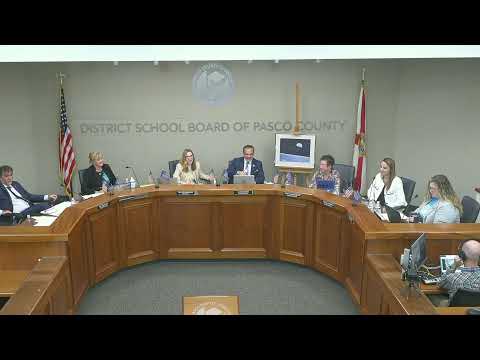
The Pasco County School Board on April 2026 approved revisions to its student code of conduct amid sustained public opposition to removing detailed guidance on students’ right to peaceful assembly.
Multiple students and parents told the board the draft language—condensing previously detailed procedures into a brief reference to “peaceful assembly”—would give administrators too much discretion and leave students unsure how to exercise their First Amendment rights safely. “To remove even the guidelines for peaceful assembly ... sends those kids the same message their homes already sent them,” Samantha Cooper, a student, told the board, saying deletion would make students feel their voices are “an inconvenience.”
Parents and advocates repeatedly cited the landmark Tinker v. Des Moines standard, arguing the district’s earlier, more descriptive guidance helped students and staff plan safe, supervised gatherings. “Small wording changes in the student code of conduct can chisel away at constitutional rights,” Jackie DeCaires told the board, calling for retention of clear, actionable rules rather than vague references.
Lawrence Richards and Mia Giordano said replacing the existing procedural text with a brief phrase would create ambiguity for staff and students and could expose the district to inconsistent enforcement and claims of viewpoint discrimination. “If the goal is truly to prepare students for civic participation, then strengthen it, don’t dilute it,” Richards said.
Supporters of the revised draft and members of the student code committee said the language preserves student rights while protecting instructional time. Board member Vince (last name as recorded in the meeting) noted the phrase “peaceful assembly” has been used in prior years and emphasized that student rights exist even if regulatory wording is tightened. The board also said staff will continue committee work next year to refine and clarify language where appropriate.
After committee reports and board discussion acknowledging the public concerns, the board voted to adopt the student code of conduct revision by voice vote. Chair Boyden announced the motion carried.
What happens next: The newly adopted code will be recorded in the district’s official minutes; the board indicated further committee work and possible language refinements will continue in the coming year.