Get Full Government Meeting Transcripts, Videos, & Alerts Forever!
Get email alerts on the Search And Seizure topic
No spam. Unsubscribe anytime.
Appeals court weighs whether officers lawfully ordered juvenile out of car and frisked him
Summary
In Commonwealth v. (juvenile), defense counsel argued officers lacked reasonable suspicion to issue an exit order and to frisk a 16‑year‑old who did not match the 911 description; the Commonwealth said officer testimony and the scene's circumstances justified the measures under a totality‑of‑circumstances test.
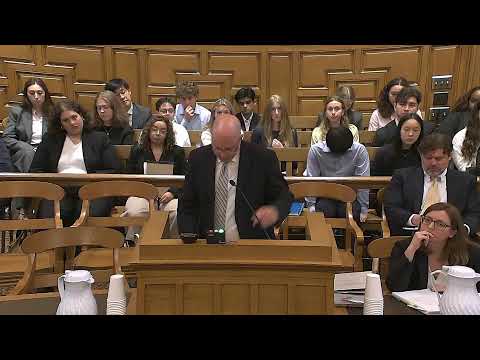
Taylor Henley, representing the juvenile appellant, told the Appeals Court the exit order in this case was a constitutionally significant intrusion and was not supported by the record. Henley argued the juvenile “did not match any descriptions provided by the 911 caller” and that officers could have used less intrusive measures (for example, asking occupants to roll down windows) instead of ordering everyone out and conducting pat frisks.
The lawyer emphasized proportionality under Article 14 and said the record and body‑worn camera footage show only limited objective grounds to single out the juvenile. Henley said the subsequent pat frisk lacked the reasonable, articulable suspicion required for that level of intrusion once it was clear the juvenile did not fit the 911 description.
Lindsey Conkey, for the Commonwealth, framed the question narrowly: whether Officer Ryan had reasonable suspicion to support the frisk at the moment he conducted it. Conkey argued the 911 report, officer observations of a group near the reported location, and testimony crediting the officer’s training and on‑scene observations provided a constitutionally adequate basis for the exit order and frisk.
The panel pressed both sides on timing and what the body‑worn camera material shows; the defense acknowledged it had not supplied time‑stamps for specific video moments and the court noted it had located the moments in the record. The panel took the matter under advisement.