Get Full Government Meeting Transcripts, Videos, & Alerts Forever!
Get email alerts on the Criminal Appeal topic
No spam. Unsubscribe anytime.
Appeals court hears bid for new trial over late‑disclosed phone image and prosecutor remarks
Summary
In Comma v. Johnson, appellate counsel urged the Appeals Court to order a new trial, saying a late‑disclosed phone screensaver and prosecutorial statements combined to deprive the jury of its fact‑finding role; the Commonwealth replied that the trial judge did not abuse discretion and the verdict would stand given the other evidence.
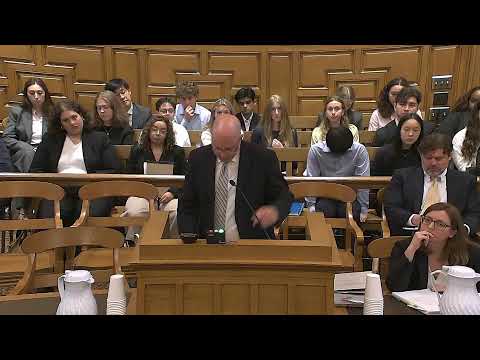
Appellate counsel Adriana Contrerasi told the three‑judge panel that her client, Mr. Johnson, is entitled to a new trial because last‑minute disclosure of a cell‑phone screensaver and “the prosecutor's comments completely robbed the jury of their fact‑finding function.”
Contrerasi said the screensaver was inculpatory and, combined with what she described as excessive opening and closing argument, “created a substantial risk of a miscarriage of justice.” She argued the defense could have made different pleas or strategic choices had the screensaver been disclosed earlier and relied on case law (including Davis and Brazil) to show the prosecutor exceeded the bounds of permissible argument.
Jennifer Thompson, arguing for the Commonwealth, said the motion judge did not abuse his discretion in denying a new trial and that the record did not show prejudice from the delayed disclosure. “There was no substantial risk of a miscarriage of justice here because the other evidence against the defendant was strong,” Thompson said, pointing to witness identifications, the recovery of the victim's phone, and corroborating police testimony.
The justices questioned both sides about when and how the screensaver became visible on the phone and whether the prosecutor's language crossed the line from permissible inference to improper identification. Thompson acknowledged that “in retrospect” some phrasing might have been better avoided but maintained the Commonwealth's view that the evidence, taken as a whole, would not have changed the jury's verdict.
The court took the arguments under advisement. The panel did not announce a decision at the hearing; the case will be decided on the briefs and oral argument record.