Get Full Government Meeting Transcripts, Videos, & Alerts Forever!
Get email alerts on the Lara Budget topic
No spam. Unsubscribe anytime.
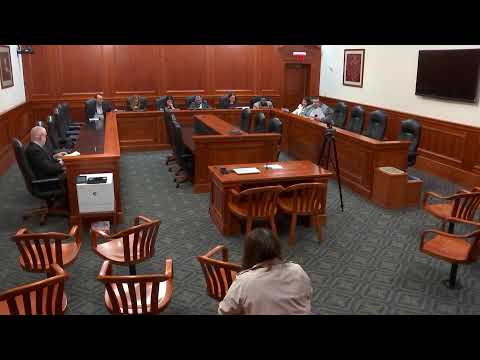
Subcommittee previews LARA budget; MCOLES, prosecutor counsel moved into LARA
Summary
The House appropriations subcommittee released a recommended LARA budget of $589.8 million (a 5.8% cut), including transfers of MCOLES and the prosecuting attorneys' coordinating counsel to LARA, and line‑item reductions while authorizing 1,826 FTEs (+13).
Una, the subcommittee’s presenter, outlined the House subcommittee chair’s recommendation for the Department of Labor and Regulatory Affairs (LARA), saying the proposal includes a total gross appropriation of $589,772,400, a decrease of $36,234,500 (about 5.8%) from the current year. She said the recommendation includes roughly $260,400,000 in general fund, a drop of about $19,100,000, and authorizes 1,826 FTEs, an increase of 13 positions.
Why it matters: the proposal moves several regulatory and legal functions into LARA and makes line‑item reductions that will change how licensing, enforcement and certain legal services are administered across departments.
Una told the subcommittee the House package moves the Michigan Commission on Law Enforcement Standards (MCOLES) from the State Police budget into LARA, covering five line items that total $28,500,000 gross, $13,900,000 GF and 27 FTEs. She also said the prosecuting attorneys’ coordinating counsel is being transferred into LARA from the Department of Treasury (previously in the attorney general’s budget), a change Una described as totaling $2,700,000 and 14 FTEs (about $2,200,000 GF).
The presenter detailed one‑time and restricted funding changes: a $1,000,000 general‑fund line item for Michigan Task Force 1 (now ongoing), $550,000 in state‑restricted funds to offset expected licensing revenue reductions, and smaller state‑restricted allocations for the Public Service Commission’s underground facilities safety education, business‑ethics training, appraiser IT work and other projects. Una also described a tax‑tribunal allocation (state‑restricted and limited‑term FTEs) to address a small‑claims backlog.
Committee members asked how some items were chosen. Representative Steele asked whether “employees go back to work full time”; Una answered that a general provision appearing in house budgets requires 80% in‑person occupancy for employees. Rob McKinney questioned why utility‑consumer‑representation funding proposed by the executive was excluded from the House package; the chair said the omission reflects budget tradeoffs the subcommittee will continue to negotiate.
The subcommittee debated new boilerplate sections that would, among other things, require LARA not to let pending litigation delay licensing investigations (new section 2.59), establish access for appropriations leaders to department facilities, and ask the Public Service Commission to publish rate‑case documents and submit justification reports to appropriations committees.
The subcommittee did not adopt any amendments to the LARA summary during this session. Next procedural steps recorded in the meeting included motions to adopt H‑1 substitutes for related bills and to report them to the House Appropriations Committee.