Get Full Government Meeting Transcripts, Videos, & Alerts Forever!
Get email alerts on the Education MTSS topic
No spam. Unsubscribe anytime.
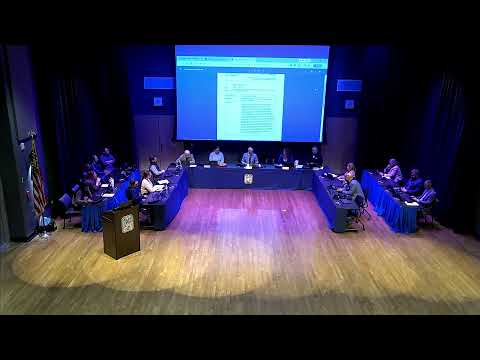
Board hears MTSS results; district outlines "Lions Time" core‑extension schedule
Summary
At its April 21 meeting, the Lower Moreland Board heard a middle‑school MTSS update showing double‑digit gains on recent benchmarks and approved scheduling changes that create a common 25‑minute "Lions Time" for targeted interventions and 15‑day core‑extension options for all students.
The Lower Moreland Board of School Directors on April 21 received an update on the district’s multi‑tiered system of supports (MTSS) for middle school students and heard details of a new common intervention block called “Lions Time.” Miss Dilkes, who led the presentation, described MTSS as a "data driven framework" delivered in tier 1, 2 and 3, and said the district uses benchmark results, curriculum‑based assessments and prior PSSA scores to place students.
Why it matters: The change creates a shared 25‑minute block in middle‑school schedules intended to let teachers deliver tiered interventions and core‑extension enrichment in a single, coordinated window. Board members pressed for specifics about how students are identified, group sizes and fidelity of progress monitoring — questions administrators used to explain the role of Panorama and IXL in tracking progress.
Miss Dilkes told the board that recent benchmark comparisons show notable gains: "In our grade 7 reading, we had a 20% increase in at‑or‑above benchmark performance and a 19% decrease in below benchmark," and that grade 8 reading rose about 9% at or above benchmark. She also reported math improvements (a 15% increase in at/above benchmark overall and comparable grade‑level gains) and highlighted individual case examples, including students with special‑education IEPs who recorded multiple years of growth in one year. "We had a grade 7 student who began the year testing at grade 8 and at the last benchmark grew to grade 10," she said.
Administrators explained placement decisions are made by triangulating prior PSSA results, the most recent benchmark and curriculum‑based averages; they said iReady and the instructional grouping report help identify common focus areas such as vocabulary or informational text comprehension. Tier‑3 groups, the presentation noted, typically range from about four to ten students and operate on a three‑day rotation within a six‑day cycle.
The presentation also outlined core‑extension options — 15‑day mini‑units students can select when they are not in tier‑2 or tier‑3 intervention — including combinations of ELA and math skills, an "empathy and advocacy" project, a Fantasy Sports Lab that applies math to sports statistics, and a lightweight gifted access option called Eco Challenge modeled on Future Cities. Administrators said core extensions were developed after researching models used by peer districts and consulting teachers; Mr. Hyland led the scheduling research cited in the presentation.
Board members praised the focus on benchmarking and student growth while asking for continued clarity on assessment frequency. In response, presenters said they are experimenting with shorter progress checks so instruction remains the dominant activity during Lions Time. They also said benchmark reports were mailed home this year to increase family engagement.
Next steps: The presentation closed with administration noting ongoing refinement of grouping criteria and scheduling; the board did not take a separate vote on curriculum changes at the meeting and will continue to monitor implementation and outcomes.