Get Full Government Meeting Transcripts, Videos, & Alerts Forever!
Get email alerts on the Broadband Bead topic
No spam. Unsubscribe anytime.
MiHi outlines BEAD rollout, $1.559 billion allocation and remaining 47,000 unfunded locations
Summary
Eric Frederick of the Michigan High Speed Internet Office told the House Communications and Technology Committee that Michigan’s BEAD awards will target about 197,964 locations and that the state received $1,559,000,000 in BEAD funds; he warned ~47,000 locations remain unfunded, a waiver for roughly 15,000 farm locations was denied by the NTIA, and MiHi expects to sign 29 subgrantee agreements by mid‑June.
Eric Frederick, chief connectivity officer for the Michigan High Speed Internet Office (MiHi), told the House Communications and Technology Committee that Michigan received $1,559,000,000 in federal BEAD funding and that the state’s awards will reach about 197,964 homes, businesses and institutions statewide.
Frederick said MiHi identified roughly 91,000 locations initially flagged as unserved and processed about 2,200,000 challenge records to refine eligibility. He told the committee his office reviewed roughly 72,000 aerial photos and processed nearly 1,200 project applications — more than any other state — before negotiating preliminary awards with 29 subgrantees.
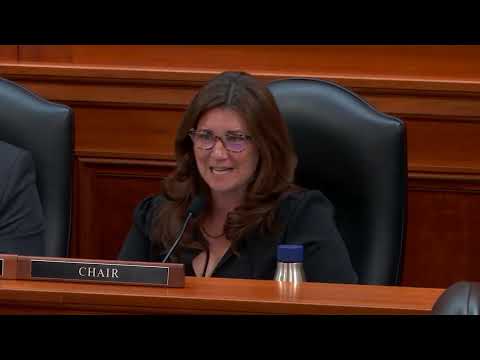
Why it matters: the awards are intended to close significant gaps in Michigan’s broadband coverage, but Frederick said about 47,000 locations remain unserved and unfunded by BEAD. "We estimate that there's probably 47,000 homes and businesses across Michigan that were not caught in the BEAD program," he said, and he added that a waiver MiHi filed with the NTIA to retain about 15,000 farm locations "was denied by the NTIA and so we had to remove those locations from, from our BEAD program." Chair Green pressed for any new federal guidance; Frederick answered, "The short answer is no. We have not received any additional guidance on those locations." (Eric Frederick, MiHi)
Timeline and next steps: MiHi said it expects to negotiate and sign subgrantee agreements by mid‑June. Once agreements are signed, subgrantees will generally have four years to complete infrastructure builds, with the possibility of a single one‑year extension; Frederick described longer federal interest and compliance monitoring periods that follow construction.
Implementation challenges: Frederick listed several risks that could slow or complicate builds: national workforce and supply‑chain shortages, Build America, Buy America (BABA) compliance constraints that limit available suppliers, NEPA and local permitting delays, and the long‑term sustainability risk that newly built networks may not gain enough subscribers to be viable. On supply chain and BABA he said states are competing for a limited pool of domestically produced components and that MiHi is looking for additional suppliers in Michigan.
Performance testing limits: Frederick cautioned that NTIA performance‑testing rules restrict how many sites a state may test. "For example, if an Internet service provider tells us that they've built to 1,000 locations in this year, we can only test no more than 50 of those locations one time during that year," he said, and he noted additional limits on post‑build testing during federal interest periods for certain technologies.
Questions from members: Representative Koontz asked whether rail grade crossings present a permitting problem; Frederick said ISPs and their contractors typically obtain railroad crossing permits directly from railroads and that the issues are usually handled at the construction level. Representative Shriver raised concerns about data privacy, asking whether MiHi requires subgrantees to adopt privacy protections or "privacy by design" clauses to prevent personal data from being harvested or used to train AI models. Frederick said those specific privacy clauses are not written into the state grant agreements, but "every Internet service provider is required to have a cybersecurity plan as part of their BEAD grant award," and that MiHi requires those plans to meet NTIA standards.
Other federal programs: Frederick noted BEAD is only one of several federal programs building broadband in Michigan — he cited FCC and USDA programs and Michigan’s ROBIN program — and said the state’s BEAD work is designed to fill gaps left by other builds.
How to raise complaints: Frederick advised residents experiencing construction damage to try to contact the contractor or ISP (contact info is often on contractor vehicles), and said MiHi or the Michigan Public Service Commission can be engaged when the project is funded by a MiHi subgrantee.
The committee: the meeting began with roll call and adoption of minutes and closed after a motion to excuse absent members prevailed; MiHi said it would continue coordinating with subgrantees and federal partners as it moves to finalize agreements.