Get Full Government Meeting Transcripts, Videos, & Alerts Forever!
Get email alerts on the School Preservation topic
No spam. Unsubscribe anytime.
Residents and staff urge board to preserve LEAP/Lebanon elementary, citing unique outdoor program and community ties
Summary
At a public input session, parents, teachers and local officials urged the Watertown Unified board not to close Lebanon Elementary or displace the LEAP outdoor/agricultural program, saying its curriculum, donated infrastructure and small-class culture are not easily moved.
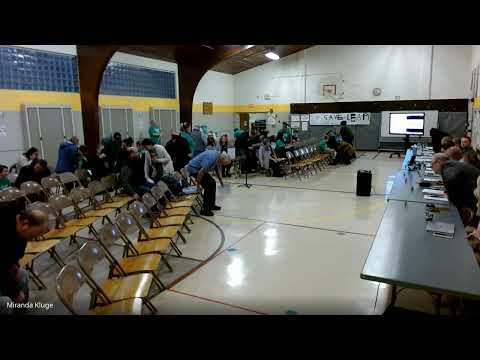
Dozens of residents, teachers and local officials urged the Watertown Unified School District to preserve Lebanon Elementary and the LEAP program during a public input session focused on potential closures.
Greg Frederick (Speaker 11), who identified himself as a town chairman from Lebanon, described the school as a community hub and asked whether future local housing might increase enrollment. Multiple parents and staff detailed LEAP’s hands-on, place-based curriculum: gardens, beehives, animal care and outdoor classrooms developed through grants, PTO fundraising and donations. "These experiences cannot be replicated in a standard classroom," one commenter said, arguing the program’s location is integral to its curriculum.
Teachers and parents said small class sizes—often 13–15 students—allow individualized attention that benefits students who struggle in conventional settings. A special-education teacher (Speaker 4) and a long-serving staff member (Speaker 4) described the school’s role in student success and the community’s sustained investment through volunteer time and grant writing.
Local leaders including Tony Arnett (Speaker 12), calling in remotely, and Ben Keith (Speaker 10), who identified himself as Lebanon’s fire chief, urged the board to consider Lebanon as a laboratory school with open land and to delay closure decisions until neighboring referendums and enrollment changes are clearer. Parents warned that closing Lebanon and Lincoln could displace as many as 200 students—a concern board members said they would examine further.
Speakers pressed the board for transparent, school-level financial figures and suggested alternatives to outright closure, including administrative restructuring, reassignment of staff roles, selling surplus property to generate revenue and exploring ways to rehouse LEAP without losing the program’s land-based components. Board members acknowledged the public’s passion, said they have tried to share data in open meetings, and promised to take the input into account before formal action.