Get Full Government Meeting Transcripts, Videos, & Alerts Forever!
Get email alerts on the Budget topic
No spam. Unsubscribe anytime.
Watertown Unified board outlines $5 million shortfall and previews possible elementary closures; decision scheduled for February meeting
Summary
The Watertown Unified School District told residents it projects a roughly $5 million budget shortfall for 2026–27 and is considering closing two elementary schools to close a $2.5 million annual gap; the board said no final vote has been taken and will revisit options at upcoming meetings.
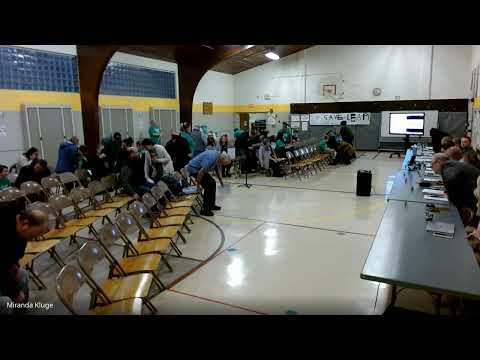
The Watertown Unified School District told a packed public input session that it projects about a $5,000,000 shortfall in its 2026–27 operating budget and is weighing building closures and other cuts to close the gap.
At the meeting the presiding officer (Speaker 1) said the district has seen enrollment decline—about 875 students over roughly 15 years—and that the district is not able to sustain recurring deficits. The board described a recent decision to pursue a $4.5 million referendum and to commit $2.5 million from the district budget toward the shortfall; previous larger referendums were described as having failed, including one the board said lost by about 1,700 votes.
"We intend for this to be somewhat of an informational session," the presiding officer said, emphasizing that no final decisions have been made and that the board will take up next steps at upcoming meetings. The district also cited a facility-assessment estimate of roughly $90,000,000 in capital needs over 15 years, including about $30,000,000 in top-priority work.
Board members and staff framed consolidation or closures as one of several options to achieve recurring savings. Speaker 3 told the public the district has sought data and that a previous analysis indicated consolidation of at least two buildings could reduce operating costs by about $1,659,567 annually. Board members said some savings have already come from prior reductions and one-time measures; the district reported roughly $1,200,000 in one-time savings identified after a failed larger referendum.
Residents repeatedly asked for specific figures about per-pupil costs and monthly or annual savings from closure. Officials said some figures are available in board packet documents (facility assessments, enrollment studies and the district's strategic plan) but acknowledged that some school-level savings estimates still require more precise breakdowns. The presiding officer said the ESE (district operations/central services) building houses storage, a maintenance workshop, E‑Campus Academy and central administration functions and that relocating those functions would require build-outs and additional expense.
The board scheduled the next formal board meeting and asked the public to return for continued discussion; the presiding officer said a final decision could appear on a future agenda (the board referenced consideration at meetings in late February).