Get Full Government Meeting Transcripts, Videos, & Alerts Forever!
Get email alerts on the Strategic Petroleum Reserve topic
No spam. Unsubscribe anytime.
Energy Secretary Chris Wright says U.S. will refill Strategic Petroleum Reserve through trades amid Iran tensions
Summary
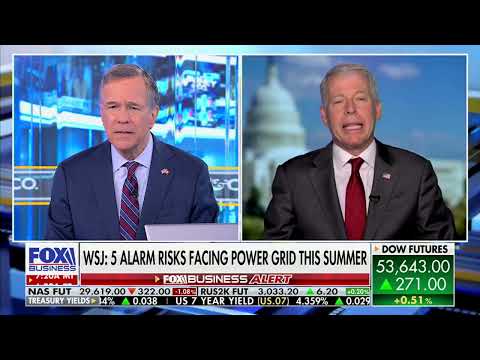
In a broadcast interview, Energy Secretary Chris Wright said low oil prices reflect confidence in U.S. leadership and the military and outlined a plan to refill the Strategic Petroleum Reserve over 24 months through exchange transactions that he said will return about 1.25 barrels for each barrel released.
Energy Secretary Chris Wright said in a broadcast interview that the United States will work to refill the Strategic Petroleum Reserve over the next 24 months through exchange deals, and he attributed current oil-market stability to confidence in national leadership and military efforts.
"David, I think what you're seeing there is confidence in president Trump's leadership and confidence in the American military," Wright said, arguing that U.S. action has helped keep global flows moving. He cited July 4 shipments of 22.5 million barrels from the Persian Gulf region, saying about 6 million barrels moved through rerouted pipelines and 16.5 million through the Strait of Hormuz.
When the host noted that U.S. oil was trading below $70 and asked when the government would rebuild the reserves, Wright said the administration plans to refill the SPR over roughly two years. "We're bringing a barrel out today to get 1 and a quarter barrels back, next year sometime," he said, adding the trades would leave the SPR with an estimated 30 million to 40 million additional barrels compared with the level at the start of the releases.
Wright contrasted that approach with what he and the host described as sales by the previous administration, saying the current program involves exchanges rather than outright sales. The host and secretary also discussed rerouting and longer-term pipeline expansions as logistics that have helped maintain supply.
The assertions made in the interview are the secretary's descriptions of policy and market conditions; the transcript of the interview does not provide independent verification of the figures or of the effectiveness of the military or diplomatic actions cited.
The secretary's timeline for exchanges and the projected net change to SPR are administration statements of intent rather than a formal enactment or congressional action; implementation could depend on further administrative steps and contracting.