Get Full Government Meeting Transcripts, Videos, & Alerts Forever!
Get email alerts on the Wastewater topic
No spam. Unsubscribe anytime.
Tremonton officials say aging wastewater plant needs $7.2M now, up to $15M more for later phases
Summary
Public works staff told the council the city’s wastewater plant is near its permitted limit and recommended a three‑phase rehabilitation: $7.2 million for aeration basins and clarifiers this year, $3 million design/build for digester/solids next year, and $4.5–9 million for headworks to add capacity. Council asked for options to reduce inflow and infiltration before larger expansions.
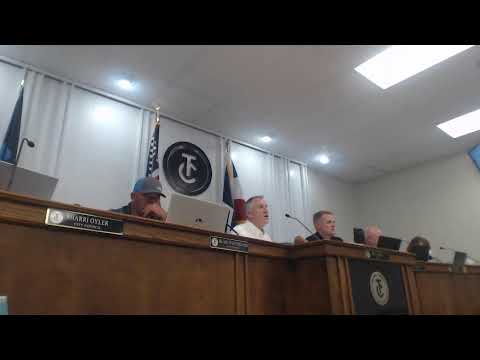
Carl, the city’s public‑works representative, told the Tremonton City Council that the wastewater treatment plant is old and “slowly actively failing,” and that influent is approaching the permit limit of 1.9 million gallons per day.
Carl said the city has divided repairs and upgrades into three phases: Phase 1 — aeration basins and secondary clarifiers — is estimated at $7.2 million and is already funded and underway; Phase 2 — digester and solids‑handling rehabilitation — is roughly $3 million and Carl asked the council to authorize design this summer so construction can follow next year; Phase 3 — headworks and other upgrades — could cost between $4.5 million and $9 million depending on final design, and would add additional plant capacity. “If we do all three of those things, we can buy 10 to 20 years at the plant,” Carl said.
Councilors and staff discussed demand math: Carl estimated one home contributes about 360 gallons per day, so 1,000 homes add roughly 360,000 gpd of load. He warned that approved but not yet built developments will add to the load and that storm events and infiltration/inflow (I&I) create high peaks that stress the plant.
Several council members pressed for alternatives to immediate large capital spending. One member asked whether locating and disconnecting storm drains illegally tied to the sewer system would help; Carl agreed it could, and recommended a targeted I&I study. He gave a planning‑level cost of about $200,000 for a thorough study that could identify repair priorities and potentially defer some expansion costs by reducing peak flows.
The discussion left two clear council directions: move forward with the funded Phase 1 work and pursue design for the digester/solids work, and ask staff to evaluate the cost and benefits of an I&I study and other near‑term fixes before committing to full headworks construction. The council did not take a final funding vote on the later phases during the meeting.
Next steps: staff will return with any refined cost estimates, a recommended scope for an I&I study and timeline for design work on Phase 2. The council moved on to budget discussions about how to pay for future infrastructure needs.