Get Full Government Meeting Transcripts, Videos, & Alerts Forever!
Get email alerts on the Rezoning Lv Land topic
No spam. Unsubscribe anytime.
Planning commission recommends rezoning for LV Land Holdings after infrastructure debate
Summary
After a lengthy public comment period and technical discussion about sewer, drainage and roads, the Tremonton Planning Commission voted 5–4 to recommend rezoning the annexed LV Land Holdings property to enable a developer-funded infrastructure plan including a regional lift station and about $8–10 million in off-site improvements. The recommendation goes next to the city council.
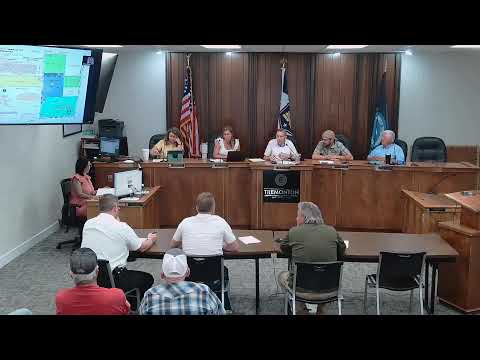
The Tremonton Planning Commission voted to recommend rezoning the annexed LV Land Holdings property to the city council after a prolonged debate over timing, infrastructure and density.
The commission’s motion, made by commissioner Andrea and seconded by Mark, passed by a 5–4 voice vote. Commissioners and the public spent more than an hour examining whether higher base density (R‑18 with potential PUD concessions) is necessary to make developer-funded off‑site improvements economically feasible, or whether lower-density options should be favored to protect drainage, farmland and rural character.
Residents said the commission should prioritize existing infrastructure and public safety. "Introducing high density new housing in an area that is disconnected from services, schools and transit would be premature," resident Christine Eppling told the commission, urging alignment with the city’s long-term plan and caution about school and emergency-services capacity.
Engineers and staff described the technical challenges and costs. A planning staff member said the project would likely require more than a mile of new water lines, secondary water connections, and a regional lift station; in the meeting, off-site improvements were discussed at an estimated $8–10 million. A staff engineer explained that lift stations are typically designed with room for future pumps and that much of the expense is electrical, generator and pipework rather than the pumps themselves.
Commissioners and residents also raised drainage concerns tied to historic tile lines. "If those lines are disrupted, there'll be hundreds of acres of farmland [affected]," longtime resident Ben Hunsaker warned, citing county drainage infrastructure and recommending careful engineering reviews and rerouting provisions. Staff confirmed the city maintains maps of known drainage tile locations and that construction approvals require rerouting or protecting affected tiles.
Supporters of the rezoning argued that without additional density the developer could not afford to build the regional infrastructure and that the city would be left to pay a larger share later. "Granting a little bit more density helps the developer take on the risk of the development and the city gets rewarded with infrastructure put in without having to put as much down ourselves," a staff member said during the discussion.
The commission's recommendation is advisory; the city council will hold future public hearings on any PUD or development‑agreement that accompanies rezoning. Staff said that PUD review and a development agreement will be used to secure open‑space amenities, staging and design details and to spell out which infrastructure improvements the developer will construct and which costs might remain with the city.
Next steps: the city council will receive the commission’s recommendation; if council action advances the rezoning, the developer will have to return for a PUD legislative hearing and a negotiated development agreement that specifies phasing and cost responsibilities.