Get Full Government Meeting Transcripts, Videos, & Alerts Forever!
Get email alerts on the Permitting Grant topic
No spam. Unsubscribe anytime.
Council reviews HUD demonstration grant to test AI in permitting
Summary
City staff outlined a proposed $600,000 HUD automated-permitting demonstration grant to pilot AI and software solutions aimed at reducing permit review times; council members debated sequencing a parallel user-fee study and worried about potential fee increases.
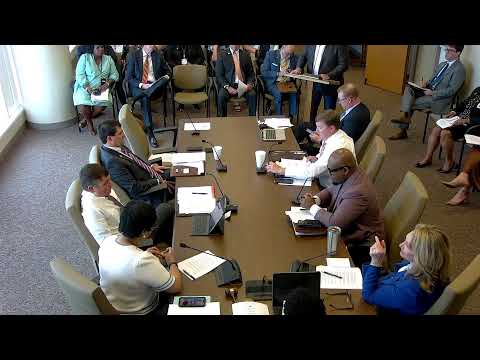
City Council members asked detailed questions on July 7 about a proposed U.S. Department of Housing and Urban Development demonstration grant that would fund an automated-permitting pilot using artificial intelligence and commercial software.
Build Mobile’s representative (identified in the transcript as Biko) told the council the city plans to use the grant to evaluate its permitting workflow, identify human-touch bottlenecks and procure a software solution for a demonstration phase. Biko said the city is proposing to request $600,000 (the NOFA allows requests up to $1.5 million) to offset procurement and implementation costs and described the first phase as a technology-identification and demonstration project.
The presentation said Mobile processed about 16,000 permits in 2025 (an estimate) and that the initiative would focus on single‑family residential permitting while allowing process improvements to transfer to small commercial projects. Biko also told the council that the inspections group has staffing vacancies and that the demonstration would help identify where technology versus additional personnel would be most effective.
Several council members pressed on two linked concerns: whether the city has a preferred vendor and how any future fee changes would be timed with process improvements. A council member asked whether a specific company had already been selected; Biko said many companies had expressed interest but clarified that a federal procurement process would control vendor selection.
Council members who spoke in favor said the grant and a separate review of user fees should run in parallel so the city can benchmark staffing, fees and performance. Others warned a fee study might recommend higher permit fees that would be politically sensitive if the city later made the permitting process faster. Biko said the fee study’s recommendations would be used to align staffing and fee structures with actual workload.
The discussion closed with council members endorsing moving forward with evaluation and study work in tandem; no final grant award or contract award was recorded during the pre-meeting.
Next steps: the clerk introduced related resolutions and contracts later in the session; any formal application for HUD funding and subsequent procurement would require separate council action.