Get Full Government Meeting Transcripts, Videos, & Alerts Forever!
Get email alerts on the Emergency Services topic
No spam. Unsubscribe anytime.
Alamance County Rescue Unit seeks stable funding; requests consideration of countywide service district
Summary
Alamance County Rescue Unit chief Chris Lawrie summarized the volunteer unit's 70‑year history, services (technical rescue, water/dive teams, ambulance backup) and asked the board to consider a county service district to provide sustainable funding for 24/7 coverage and capital needs.
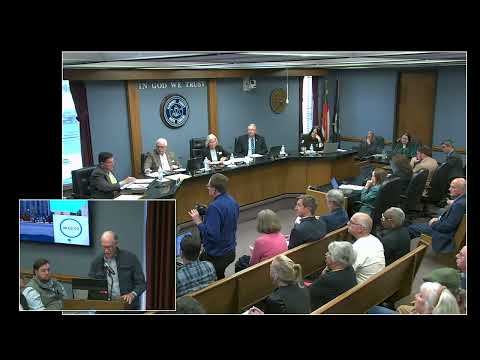
Chris Lawrie, chief of the Alamance County Rescue Unit, gave a 70‑year history of the volunteer nonprofit organization and described the unit's technical capabilities, call volume and funding needs.
Lawrie said the unit averages about 1,000 calls per year, maintains heavy‑rescue and water‑rescue assets, and recently provided mutual‑aid assistance during a major storm response. The unit currently receives $125,000 per year from the county, which helps pay for 12‑hour paid staffing shifts, vehicle maintenance and capital costs; Lawrie said additional, stable funding would allow 24/7 staffing, faster response times and improved training and equipment retention.
He requested that commissioners consider forming a countywide service district under state statute (referencing General Statute 153A‑310 as an example of enabling authority) as a way to create a predictable revenue stream for rescue and similar emergency service providers. Lawrie described potential revenue impacts in the terms of cents on the tax rate and said the unit uses donations, fundraisers and grants for the remainder of operating needs.
Commissioners expressed support for the unit’s work and discussed funding options and the county’s broader emergency response planning. Several commissioners urged staff to explore options and recognized the unit’s role in large‑scale responses, training and specialized rescues.