Get Full Government Meeting Transcripts, Videos, & Alerts Forever!
Get email alerts on the Landfill Permit topic
No spam. Unsubscribe anytime.
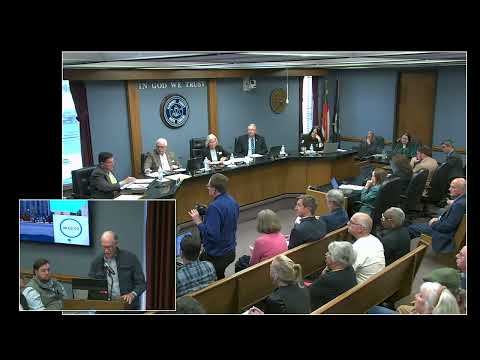
Commissioners approve Philadelphia LCID landfill permit after disputes over setbacks, buffers and on-site processing
Summary
After hours of public comment and legal back-and-forth over whether the site should be treated as a Class 1 or Class 3 facility, the Alamance County Board of Commissioners voted to approve the intent-to-construct permit for the Philadelphia LCID landfill (LCID 92). Opponents argued the access road, crushing and composting on-site require larger buffers and that nearby houses sit within setback distances.
Alamance County commissioners voted to approve the intent-to-construct permit for the Philadelphia LCID landfill (LCID 92) following extended public comment, legal presentations and planning‑staff briefings.
Opponents told the board the operation is already functioning as a waste‑processing site that includes grinding, composting and an air‑curtain burner and therefore should be regulated as a Class 3 use under the county Unified Development Ordinance (UDO). "You can't move goods to lot C without that road. It's part of their operations," a nearby resident said, arguing the 1,500‑foot access drive should be treated as part of the area of operations and trigger larger setbacks from residences.
Attorney Bob Fortic, representing a group of neighboring property owners, told commissioners the application is deficient and legally insufficient because it omits existing processing activities, places internal roads within stream buffers and fails to meet operation‑setback distances described in sections of the UDO. Fortic urged denial on three grounds: the access road is part of the area of operations, the site includes land‑clearing and processing that make it a Class 3 facility requiring larger buffers, and the application is incomplete or inaccurate.
Counsel for the applicant said state agencies including the N.C. Department of Transportation had reviewed and approved driveway work and that the project's traffic‑impact study and other engineering work were conservative. "NCDOT has taken over this, looked at the engineering, and has approved it," the applicant's attorney said, noting planning staff and the planning board had previously reviewed the application and recommended approval by a 6–1 vote.
Planning staff summarized the permit timeline and the county’s legal role, saying the commissioners must determine whether the application complies with the UDO (citing the ordinance review steps and section 6.5.0.4). County counsel told the board she would answer legal questions but would not tell commissioners how to vote.
During public comment, multiple residents described houses within roughly 90–100 feet of the proposed internal roadway and reported existing daily truck traffic and on‑site activities that, in their view, create environmental and public‑safety risks. Speakers cited concerns about dust from crushing operations, smoke and ash from burning, potential water impacts from increased truck traffic and long‑term property‑value effects.
Commissioners discussed the legal ambiguity about whether the internal access road counts as an area of operations under the UDO and acknowledged competing interpretations. After deliberation, one commissioner moved to approve the permit and another seconded. The board voted; the chair announced the motion carried and the permit was approved.
The approval advances the project to the next phase in the county's permitting process. Opponents signaled they may pursue appeals to the board of adjustment or other legal remedies, citing disagreement over ordinance interpretation and alleged gaps in the application. Planning staff and county counsel noted that an approval at this stage moves the matter to the operations‑permit phase, where additional conditions and compliance checks may apply.
The board recessed for five minutes after the vote before returning to other agenda items.