Get Full Government Meeting Transcripts, Videos, & Alerts Forever!
Get email alerts on the Board Roles And Commitment topic
No spam. Unsubscribe anytime.
Prospective Carmel Clay Schools board candidates told governance is heavy on oversight, light on pay
Summary
At a forum for prospective Carmel Clay Schools board candidates, state and local leaders described board duties—strategic oversight, financial review, policy approval and superintendent evaluation—stressed time commitments and confidentiality obligations, and urged consensus and professionalism.
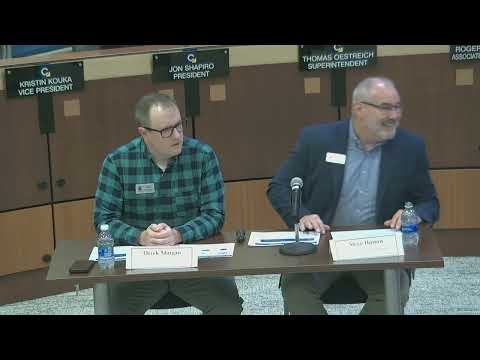
Moderators opened a prospective candidate forum and introduced panelists from the Indiana School Boards Association and Carmel Clay Schools. Panelists advised anyone considering a seat that school board service is governance of a multimillion- to billion-dollar organization and emphasized its responsibilities.
"This really is community service," said an ISBA presenter, outlining the range of duties new members should expect. Panelists said boards set mission and vision, approve and monitor a strategic plan, and evaluate district performance using data.
Steve Horton of the Indiana School Boards Association described ISBA’s role in supporting districts with policy, legal and advocacy services, saying its legal team is available to answer questions and help boards navigate state laws. Derek Morgan, ISBA assistant director, and John Shapiro, president of the Carmel Clay Schools board, urged candidates to spend time learning the district budget and noted that understanding funding sources and allocations is a key part of a member’s oversight role.
Panelists warned prospective members there is no individual authority outside a properly noticed public meeting. "None of you have individual authority," an ISBA presenter said, adding that formal power is exercised through votes taken in public session by a majority of the board.
Speakers outlined typical time commitments: most business meetings take place outside traditional work hours, materials are posted several days in advance via the district’s Diligent platform, and substantial time is required to review packets and ask questions in advance. Shapiro characterized the role as one that requires regular attendance at events across the district and participation in appointments to local boards, even if those appointments add to the time burden.
On board culture, panelists advised respectful communication, staying in the board’s policy-making lane and avoiding surprise or ambush questioning of administrators. Legal counsel Andrew Manna highlighted limits on public discussion of personnel and student matters and cited FERPA and other legal boundaries that make executive sessions and confidentiality essential tools for the board’s deliberative work.
The panel also addressed conflicts of interest: panelists said district employees cannot serve on the board, while family members employed by the district do not automatically disqualify a candidate, though appointees should avoid assignments that would create conflicts.
Shapiro noted boards may legally set compensation but called the role largely volunteer: "We get paid, a whopping $2,000," he said, and added Carmel Clay chose not to adopt the broader statute option allowing higher pay tied to teacher salaries. The session closed urging prospective candidates to come prepared to learn, listen and collaborate if elected.
The forum ended with an offer for attendees to ask follow-up questions and review resources on ISBA and district websites.