Get Full Government Meeting Transcripts, Videos, & Alerts Forever!
Get email alerts on the Food Trucks topic
No spam. Unsubscribe anytime.
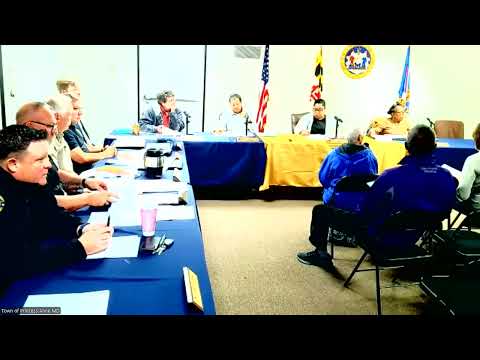
Town hears draft plan for food-truck licensing, enforcement concerns raised
Summary
Tom presented a proposed Princess Anne mobile-vendor licensing framework that would require proof of county/state health and fire compliance, a modest town license fee and location rules; councilors pressed on enforcement, parking near brick-and-mortar restaurants and spot checks.
Tom (S6) presented a proposed town-level framework for regulating mobile food vendors, saying Maryland state rules and Somerset County inspections provide the technical baseline and the town can add a simple, enforceable layer for timing, locations and a modest licensing fee.
"No food truck should be operating in Princess Anne without a valid Somerset or reciprocity food service license from a Maryland county," Tom said, summarizing the health-department requirement and explaining commissary and plan-review obligations.
He reviewed fire-safety standards from the Maryland State Fire Marshal (automatic suppression over fryers, Class K extinguishers, CO detectors where open flames are used) and noted that many municipalities require proof of those inspections as a condition of local permits. Tom proposed an annual town license that would require proof of county health and fire compliance, vehicle registration and insurance; the town fee would be calibrated to cost recovery and could be modest (examples discussed ranged to about $50).
Council members and residents asked how the town would enforce the license and whether town staff would duplicate county inspections. Tom said enforcement would rely on a partnership with the Somerset County Health Department and the state fire marshal: the town's role would be proof-of-compliance and occasional spot checks to verify continued compliance, not to replace county inspections.
Council members also raised concerns about potential competition with brick-and-mortar restaurants and about mobile vendors operating repeatedly next to permanent eateries. Tom said the ordinance could designate permitted locations, set hours and place controls on operation near fixed restaurants; private-property arrangements would remain contracts between property owners and vendors but the town could restrict town property usage and require permits.
No vote was taken. Council asked Tom to circulate the presentation materials and a draft licensing ordinance for further review and to return with proposed ordinance language that aligns the town with state and county health and safety standards.