Get Full Government Meeting Transcripts, Videos, & Alerts Forever!
Get email alerts on the Land Use Comprehensive Plan topic
No spam. Unsubscribe anytime.
Commission unanimously transmits major TOC and RAC amendments to add thousands of housing units
Summary
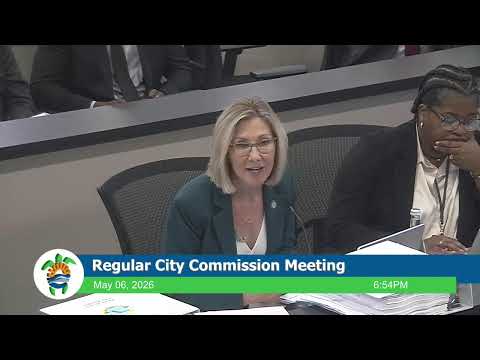
The Hollywood City Commission on May 6 voted unanimously to transmit two comprehensive‑plan amendments that would reallocate commercial capacity to add about 12,379 mid‑rise and high‑rise residential units across the Transit Oriented Corridor (State Road 7) and the Regional Activity Center, while directing staff to hold additional civic outreach and design‑standards work before second readings.
The Hollywood City Commission voted unanimously on first readings May 6 to transmit two companion amendments to the comprehensive plan that would shift commercial capacity into new mid‑rise and high‑rise residential allocations across two growth centers.
City staff said the item for the Transit Oriented Corridor along State Road 7 would convert roughly 1,000,000 square feet of commercial capacity into 4,379 residential units, introducing separate mid‑rise and high‑rise buckets and leaving zoning standards (height, setbacks and site‑level density) unchanged. A second amendment for the city's Regional Activity Center would convert about 200,000 square feet of office into 8,000 additional residential units, topping up the RAC's high‑rise allocation from roughly 3,000 to 10,000 units.
Andrea Winger, director of Development Services, told commissioners staff is "rebalancing our assets" to reflect market trends and county definitions for building typologies. She said the amendments do not change site‑specific zoning or increase allowable height; they simply make residential capacity available where the county and city expect growth and where transit exists.
Residents at the public hearing voiced concerns about traffic, the pace of outreach and the lack of explicit affordability guarantees. Lynn Smith said she first heard of the State Road 7 amendment two days before the meeting and urged more civic association outreach. Anne Ralston questioned whether voters had previously been denied a say on city property actions.
Commissioners pressed staff to commit to extra outreach before second reading. Several members said they supported reallocating capacity to transit corridors but stressed that community meetings, design guidelines to buffer neighbors, and infrastructure readiness checks are necessary before final adoption.
Commissioner Schuham asked whether material changes before second reading would require a new first reading and county review; the city attorney and staff confirmed significant changes could trigger an additional review cycle. Commissioner Quintana and others urged separate meetings for east‑ and west‑side residents to avoid stacked turnout from one side of the city.
Both items were transmitted to Broward County and associated review bodies for the next steps of the land‑use amendment process. Staff will return to the commission with results of additional civic outreach, any recommended design guidelines to address neighbor concerns, and the county review outcomes before second readings.
What happens next: transmitted amendments proceed to county review as required by the interlocal process; if approved, site‑level projects would still need to demonstrate infrastructure capacity and obtain separate approvals before construction.